
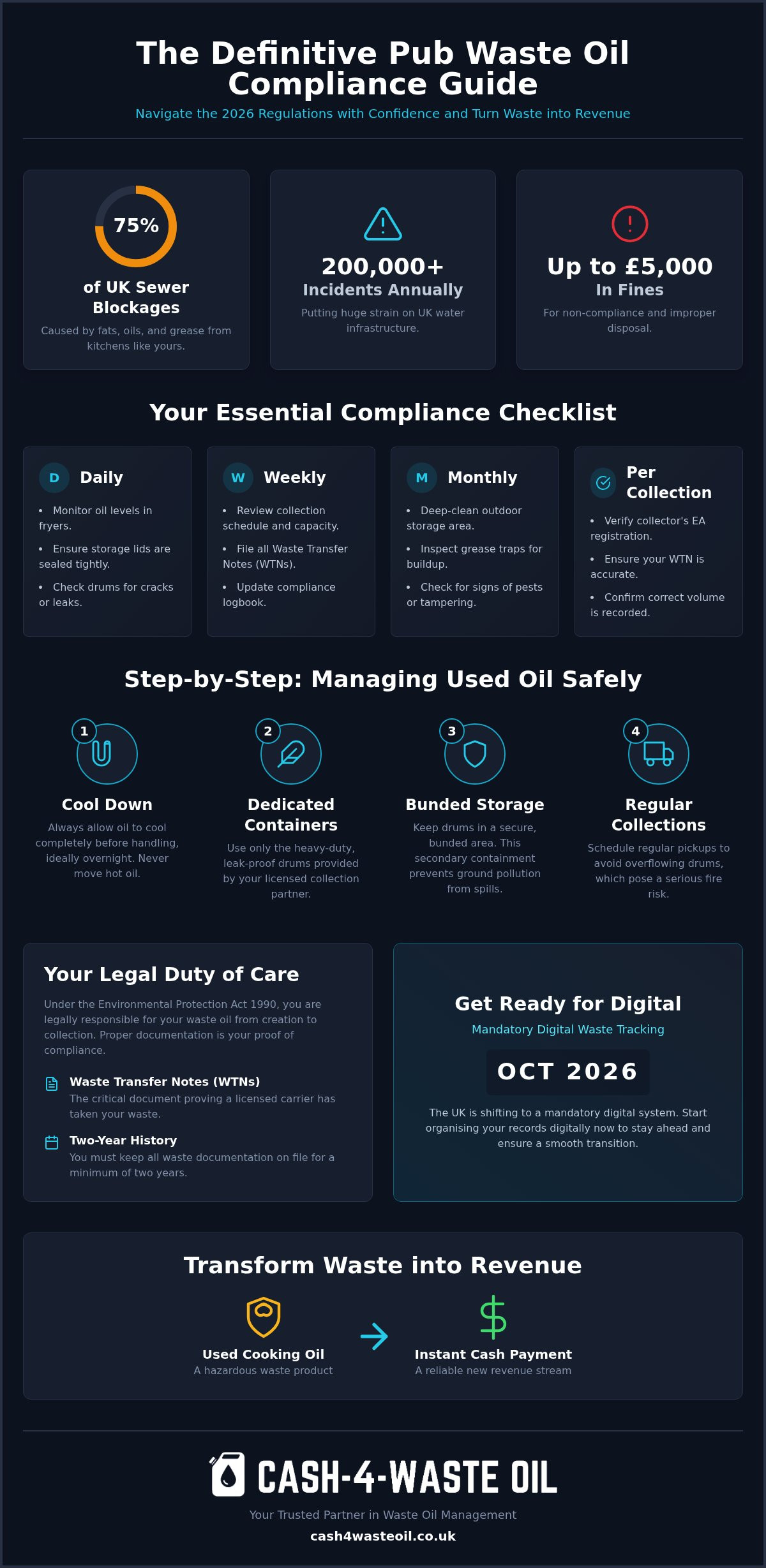
Did you know that 75% of the 200,000 sewer blockages across the UK every year are caused by fats, oils, and grease? For a pub landlord, a single "fatberg" incident or a botched inspection can lead to fines reaching £5,000 and a damaged reputation. Staying on top of your environmental duties is essential, but between managing staff and rising costs, the paperwork often feels like a second job. That's why we've created this definitive pub waste oil compliance checklist to help you navigate the latest 2026 regulations with total confidence.
We understand that kitchen inspections are stressful, especially with the shift toward mandatory digital waste tracking this October. You want a kitchen that's clean, safe, and profitable without the headache of confusing legislation. This guide promises to simplify your oil management, ensuring you pass every EHO visit with flying colours whilst turning your used cooking oil into a steady revenue stream. We'll walk through the legal requirements for Waste Transfer Notes, proper storage to deter pests, and the simple steps to trade your waste for instant cash.
Key Takeaways
- Learn how to implement a daily and weekly pub waste oil compliance checklist to streamline kitchen operations and guarantee stress-free EHO inspections.
- Understand the critical role of Waste Transfer Notes in protecting your pub from fines and ensuring you only work with licensed Environment Agency carriers.
- Discover the safest methods for cooling and storing used oil to eliminate fire hazards and prevent costly "fatberg" blockages in your drainage system.
- Identify how to transform a waste product into a consistent revenue stream through instant cash payments for every litre of oil collected.
- Stay ahead of the October 2026 transition to mandatory digital waste tracking to keep your environmental documentation fully compliant with UK law.
The Essential Pub Kitchen Compliance Checklist for 2026
Managing a busy kitchen means compliance often falls to the bottom of the pile. However, a robust pub waste oil compliance checklist is your best defence against hefty fines and operational downtime. By breaking your responsibilities into manageable chunks, you ensure that legal standards are met without disrupting service. It's about creating a system that works for your team rather than against them.
- Daily: Monitor oil levels in your fryers and storage drums. Ensure all storage container lids are tightly sealed to prevent spills and deter pests. Check the integrity of the drums; any cracks or leaks must be addressed immediately to avoid soil contamination.
- Weekly: Review your collection schedule and ensure your storage area isn't reaching capacity. Organise and file any Waste Transfer Notes (WTNs) received during the week. Check that each note contains the correct volume and date of collection whilst updating your pub waste oil compliance checklist log.
- Monthly: Conduct a deep-clean of the outdoor waste storage area. Inspect grease traps for buildup and ensure they are functioning correctly. Look for signs of pests or unauthorised access to your oil stores.
- Per Collection: Every time a collector arrives, verify their Environment Agency registration number. This simple step protects you from "cowboy" collectors who might dump your oil illegally, leaving you liable for the environmental damage.
EHO Expectations for Pub Waste Oil
Environmental Health Officers (EHOs) prioritise public safety and environmental protection. Under the Environmental Protection Act 1990, you have a legal "Duty of Care" for any waste your pub produces. This means you're responsible for the oil from the moment it enters your kitchen until a licensed carrier takes it away. Inspectors will scrutinise your outdoor waste storage centre for hygiene and safety. A messy area with oil spillages suggests poor management and often leads to a lower hygiene rating. Pouring oil down the sink is a guaranteed way to hit a zero-star rating; it contributes to the 200,000 sewer blockages the UK faces annually.
Organising Your Compliance Folder
Documentation is your primary evidence of legal operation. You must maintain a minimum two-year history of all waste documentation to satisfy local authorities. Whilst many pubs still use paper folders, the shift to mandatory digital waste tracking in October 2026 makes digital record-keeping the smarter choice. Efficiently managing your used cooking oil (UCO) involves more than just getting it collected; you need proof of where it went. Utilising a commercial kitchen oil disposal checklist ensures you never miss a step in the legal disposal process. This organised approach proves to inspectors that you take your environmental responsibilities seriously and helps you avoid unnecessary penalties.
Step-by-Step: Managing Used Cooking Oil Safely
Handling hot oil is one of the most hazardous tasks in any pub kitchen. It isn't just about ticking boxes on your pub waste oil compliance checklist; it's about protecting your staff from life-altering burns and preventing costly fires. Cooking is responsible for approximately 25% of all restaurant fires, and poorly stored waste oil often acts as a primary fuel source. Implementing a clear, step-by-step physical handling process is the only way to ensure safety whilst maintaining a professional kitchen environment.
- Cooling: Never attempt to drain or move oil whilst it's still hot. Allow it to cool completely, ideally overnight, before transferring it to storage containers.
- Dedicated Containers: Only use leak-proof, heavy-duty drums provided by your licensed collector. These are designed to withstand the weight and chemical properties of used fats.
- Bunded Storage: Store all drums in a secure, bunded area. This secondary containment ensures that if a drum fails, the oil is trapped before it reaches the soil or drains.
- Regular Collections: Don't wait for drums to overflow. Schedule collections based on your weekly volume to keep your storage area manageable and fire-safe.
Safe Transfer from Fryer to Drum
Slips and burns occur most frequently during the transfer process. Ensure the path from the fryer to the storage drum is clear of obstacles and delivery crates. Staff should always wear appropriate PPE, including heat-resistant gloves and aprons. Following HSE guidance on fryer safety is the best way to standardise these procedures and reduce workplace accidents. To ensure plastic storage drums remain intact and leak-free, always wait for the oil to cool below 40°C before transfer. Positioning your storage area away from heavy delivery routes prevents accidental damage to the drums from trolleys or vehicles. If you're struggling to find space for bulky drums, consider a professional oil collection service that provides tailored storage solutions for tight pub yards.
Maintaining Hygiene in Storage Areas
A messy oil store is a magnet for pests. Rats and foxes are attracted to the high-calorie residue left on the outside of drums, so keep the exterior of your containers wiped clean. Implement a strict cleaning protocol for any minor spillages using absorbent materials rather than hosing them into the drain. Properly sealed drums are also essential for odour control, particularly if your storage area is located near a beer garden or outdoor dining space. A well-maintained storage centre is a core part of your pub waste oil compliance checklist, showing EHO inspectors that you manage every aspect of your waste with precision and care.
Understanding Legal Obligations and Environment Agency Licensing
Compliance isn't a choice; it's a statutory requirement for every food business in the UK. Under the Food Safety Act 1990, pub landlords must ensure all waste is handled safely to prevent contamination and public health risks. Failing to follow your pub waste oil compliance checklist can result in criminal prosecution and fines of up to £5,000. These penalties don't just hit your bottom line; they can lead to the permanent closure of your kitchen if local authorities deem your operations unsafe. Working with registered collectors is the only way to ensure sustainable waste oil disposal that meets Environment Agency standards. It transforms a legal burden into a structured, safe business process.
Verifying Your Collector’s Credentials
Illegal "cowboy" collectors often target pubs with promises of free collections or no paperwork. Accepting these offers is a massive legal risk that can lead to severe repercussions. If your waste is fly-tipped, the Environment Agency will trace it back to your pub, and you will be held liable regardless of who actually dumped it. Always check the Environment Agency public register to confirm your carrier holds a valid upper-tier license. For businesses in specific areas, such as those requiring waste oil collection Islington services, using a regional specialist ensures they understand local council enforcement patterns and access restrictions. A legitimate carrier will always provide their registration number upfront. They'll also be transparent about where your oil is processed, typically turning it into eco-friendly biodiesel.
The Anatomy of a Valid Waste Transfer Note
A Waste Transfer Note (WTN) is your legal receipt for every litre of oil that leaves your premises. It must contain specific information to be valid during an environmental audit or EHO visit. This includes your Standard Industrial Classification (SIC) code, a detailed description of the waste, and the signatures of both the producer and the carrier. You must keep these documents for at least two years. Until the mandatory national digital tracking service fully replaces paper notes in October 2026, these physical or digital records are your only shield during a surprise inspection. They prove you've fulfilled your "Duty of Care" and transferred your waste to an authorised professional. Without a WTN, you have no proof of legal disposal, leaving your business vulnerable to fines and a zero-star hygiene rating.
Preventing Common Kitchen Hazards: Drains and Fire
Kitchen hazards extend beyond simple hygiene ratings; they represent significant physical risks to your property and the local infrastructure. A single lapse in your pub waste oil compliance checklist can lead to catastrophic drain blockages or intense kitchen fires. With 75% of the UK's 200,000 annual sewer blockages caused by fats, oils, and grease (FOGs), water companies are increasingly aggressive in tracing "fatbergs" back to their source. For a pub landlord, the cost of an emergency drain specialist far outweighs the effort of proper oil management. Prevention is always cheaper than a cure.
- Fatberg Prevention: Never pour used oil or fatty residues down the sink. This is the primary cause of commercial drain failure and local sewer issues.
- Fire Suppression: Keep oil storage at a safe distance from ignition points like smoking areas, outdoor heaters, or external boiler vents.
- Staff Training: Ensure every team member understands the 'No Fats to Drains' policy. This includes scraping plates and wiping greasy pans with paper towels before they reach the pot wash.
- Spill Response: Keep a dedicated spill kit in your cellar or yard. If a large drum fails, you must contain the flow immediately before it enters the public sewer system.
Protecting Your Pub’s Drainage System
Professional drain jetting is a recurring expense that many pubs can avoid through simple kitchen discipline. Instruct your staff to scrape every plate into the food waste bin and use squeegees for larger trays to remove residue. These small habits prevent the gradual buildup of solidified grease that narrows your pipes over time and leads to foul odours. If your storage containers become damaged or reach capacity unexpectedly, you cannot afford to wait. Utilising an emergency waste oil collection Kent service ensures that overflowing drums are removed before they cause a drainage disaster. Rapid response is vital for maintaining a clean, compliant site.
Mitigating Fire Risks in Waste Storage
Used oil is a potent fuel that requires careful positioning. Whilst fresh oil is relatively stable, used vegetable oil has a lower flashpoint than fresh oil because of the breakdown of chemical bonds and the presence of food particles. This makes your waste storage area a high-risk zone if it is not managed with precision. Ensure all drums are kept at least 1.8 metres away from any building openings or combustible materials in the yard. Clean your extract filters weekly; grease-laden ventilation systems allow fires to spread from the range to the roof in seconds. Integrating these checks into your pub waste oil compliance checklist protects your staff and your livelihood. If you need a reliable partner to clear your stores and reduce your fire load, you can schedule your free waste oil collection today to keep your yard hazard-free.
Turning Waste into Revenue with Cash 4 Waste Oil
Compliance often feels like an expense, but it's actually an opportunity to boost your pub's bottom line. Following a rigorous pub waste oil compliance checklist ensures your kitchen stays legal whilst unlocking hidden value in your waste drums. Instead of paying for disposal, you can receive cash on the spot for every litre of used cooking oil collected. This model reduces your overheads and simplifies your logistics, particularly for busy venues requiring a pub waste oil collection Shoreditch solution. We provide a seamless service across London, Kent, Surrey, and Birmingham, ensuring that your waste management is as profitable as it is safe.
Maximising Your Oil Rebate
To get the best return, you must keep your oil pure. Collectors pay more for high-quality waste, so ensure your team keeps water, chemical cleaners, and food debris out of the storage drums. Regular collection schedules prevent the buildup of sludge at the bottom of the containers, which can affect the final rebate. For many independent pubs, receiving cash on the spot is a vital boost to weekly cash flow; it covers minor kitchen expenses or staff incentives without waiting for bank transfers. Consistency in your pub waste oil compliance checklist ensures your drums are always ready for a high-value collection.
Supporting the Circular Economy
Your pub plays a direct role in the UK's transition to renewable energy. Every litre of oil we collect is processed into sustainable biodiesel, which significantly reduces greenhouse gas emissions compared to traditional fossil fuels. This isn't just good for the planet; it's a powerful marketing tool. Modern diners in city centres are increasingly eco-conscious and prefer supporting businesses that take environmental responsibility seriously. Promoting your "zero-waste" or "green" credentials can be a deciding factor for customers choosing where to eat and drink. By sticking to your environmental duties, you're not just passing inspections; you're building a sustainable, forward-thinking brand that resonates with the local community.
Secure Your Pub’s Future and Cash Flow
Mastering your pub waste oil compliance checklist is the most efficient way to protect your business from £5,000 fines and ensure your kitchen operates at peak safety. By implementing daily checks and maintaining a structured history of documentation, you turn a complex legal burden into a simple, manageable routine. We've explored how proper storage prevents catastrophic drain blockages and fire hazards whilst positioning your pub as a champion of the circular economy. Compliance doesn't have to be a headache when you have a professional partner handling the logistics for you.
As an Environment Agency registered carrier, we take the stress out of waste management by providing professional collections that work around your busy service hours. You'll receive legal Waste Transfer Notes provided instantly to keep your compliance folder EHO-proof. Best of all, we offer cash paid on the spot for your used cooking oil, transforming your waste into immediate revenue for your business. Get a free collection and instant cash for your pub’s waste oil today and focus on what you do best: running a successful, profitable venue. Your kitchen is ready for 2026; let's make sure your waste management is too.
Frequently Asked Questions
Do I legally need a Waste Transfer Note for my pub kitchen oil?
Yes, you must have a valid Waste Transfer Note (WTN) for every collection of used cooking oil. This is a mandatory requirement under the Environmental Protection Act 1990 to prove you've fulfilled your Duty of Care. You're legally required to keep these records for at least two years. From October 2026, you'll need to transition to the mandatory national digital waste tracking service to remain compliant with UK law.
How much cash can I get for my used cooking oil in 2026?
The amount of cash you receive depends on the volume collected and the current market rebate rates. Collectors typically pay a set rate per litre for oil that is clean and free from excessive water or food debris. Because used cooking oil is a valuable feedstock for biodiesel, your waste is a commodity. Regular collections ensure you maintain a steady stream of "cash on the spot" to support your pub's weekly cash flow.
Can I put used cooking oil in the general waste bin?
No, you should never dispose of liquid oil in general waste bins. Used cooking oil is classified as commercial waste and must be handled by a licensed waste carrier. Putting it in general waste leads to leaks, attracts pests, and can result in significant environmental fines. Using a dedicated pub waste oil compliance checklist helps ensure your staff follow the correct disposal route every time.
What happens if a pub is caught pouring oil down the drain?
Pouring oil down the drain leads to criminal prosecution, heavy fines, and the potential for a zero-star hygiene rating. Water companies use advanced CCTV and tracing techniques to find the source of "fatbergs" in the sewer system. If a blockage is traced back to your pub, you'll be liable for the cost of the repair and clean-up. It's a risk that can permanently damage your reputation and your bank balance.
Is there a minimum amount of oil required for a free collection?
Most professional collectors require a minimum volume, such as 20 litres or one full drum, to make a free collection viable. This ensures the service remains efficient and environmentally friendly by reducing unnecessary vehicle journeys. If you're a low-volume producer, you can simply store your oil in a secure drum until you've reached the required threshold for a payout.
How should I store waste oil to comply with fire safety regulations?
Store your waste oil in secure, leak-proof drums located in a dedicated, bunded area at least 1.8 metres from any building. This secondary containment prevents spills from spreading and reduces the risk of oil acting as a fuel source during a fire. Ensure the storage area is kept clean and free from combustible materials like cardboard or wooden pallets. Regular inspections of this area are a vital part of your fire safety protocol.
Does Cash 4 Waste Oil provide the drums for storage?
Yes, we provide heavy-duty, leak-proof storage drums to our regular clients as part of our service. These containers are specifically designed for the safe storage and transport of used fats and oils. Using our provided drums ensures your storage setup meets Environment Agency standards. We'll swap your full containers for clean ones during every scheduled collection to keep your yard tidy and compliant.
How often should a busy pub kitchen have its oil collected?
A busy pub kitchen should typically schedule collections weekly or fortnightly depending on the volume of frying. You should never allow your storage drums to reach more than 90% capacity to avoid the risk of spills or overflows. Use your pub waste oil compliance checklist to monitor oil levels daily. This proactive approach ensures you always have space for waste oil and a consistent flow of rebate cash.