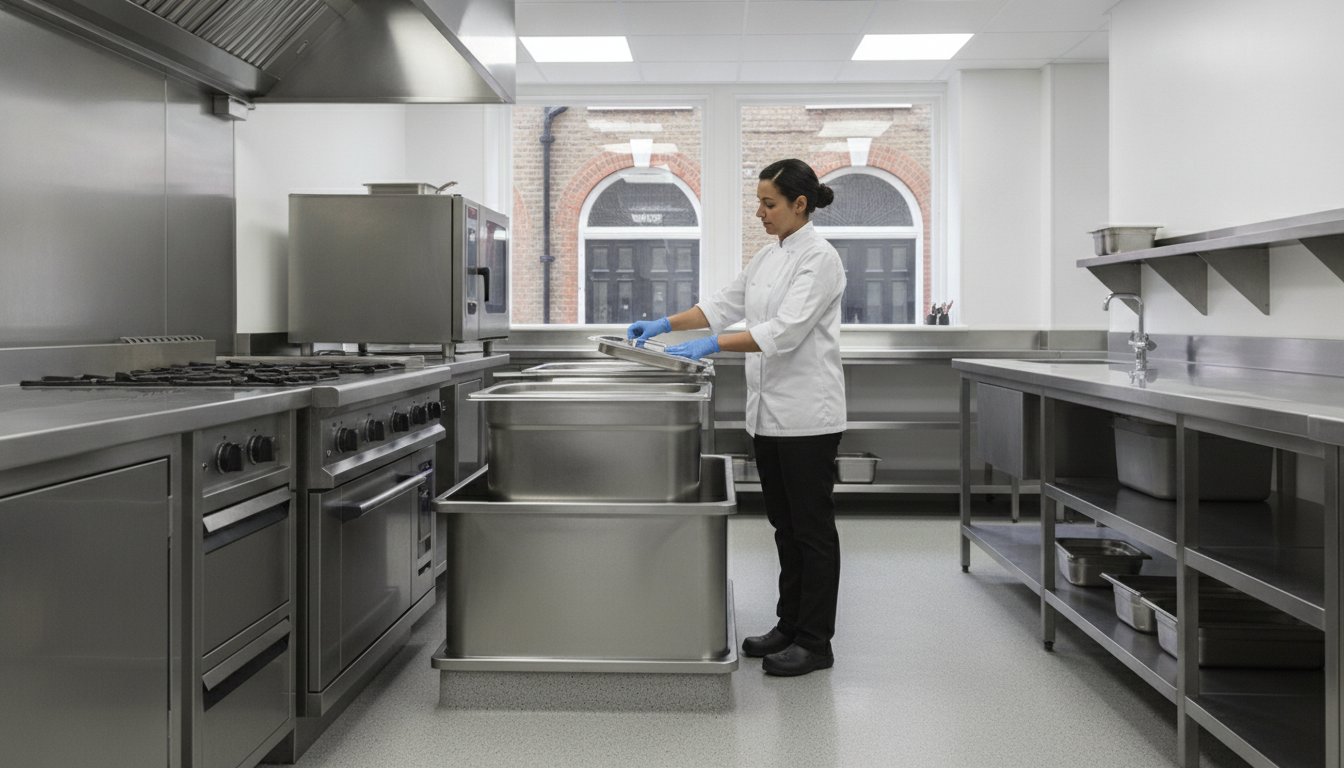
The messy oil drums taking up space in your London kitchen are actually holding onto your profit. If you're like most restaurant owners in Kent or Surrey, you're likely fed up with unreliable collectors who fail to show up, leaving you with a sticky, overflowing mess and a headache over Environment Agency paperwork. It's frustrating to manage a busy service whilst worrying about whether your waste disposal meets the latest legal standards.
You can easily turn this logistical burden into a streamlined revenue stream when you learn how to get cash for cooking oil through a professional, licensed service. This 2026 guide explains how to secure instant on-site payments and ensure your kitchen remains fully compliant with mandatory Waste Transfer Notes (WTNs). We will walk you through the upcoming transition to the Digital Waste Tracking Service and show you how to transform your storage area into a tidy, oil-free space that works for your business.
Key Takeaways
- Shift your mindset from waste disposal as a cost to a revenue-generating activity that supports the UK's sustainable biodiesel industry.
- Learn the exact steps to get cash for cooking oil with instant, on-site payments that provide immediate petty cash for your business.
- Ensure 100% legal compliance by understanding the mandatory role of Waste Transfer Notes and your "Duty of Care" responsibilities under Environment Agency rules.
- Maximise the value of your rebate by following simple storage and purity best practices to keep your used oil free from water and food debris.
- Benefit from a reliable, local collection service tailored specifically for the fast-paced hospitality sectors across London, Kent, and Surrey.
Why You Should Get Cash for Cooking Oil in 2026
Managing a commercial kitchen in 2026 requires more than just culinary skill; it demands smart logistics. For years, used cooking oil was seen as a nuisance waste product that cost money to remove. That's no longer the case. You can now get cash for cooking oil by treating your waste as a valuable resource rather than a burden. This transition turns a messy, daily chore into a legitimate revenue stream for your business.
Beyond the financial gain, regular removal is essential for kitchen safety and efficiency. Storing old oil drums for too long takes up valuable floor space and creates significant slip hazards. It also attracts pests and creates unpleasant odours that can negatively impact your hygiene ratings. Professional collection ensures a sustainable waste oil disposal process that keeps your workspace clear, your staff safe, and your operations running smoothly.
Financial Incentives for Commercial Kitchens
The rebate model is straightforward: you are paid based on the volume and quality of the oil you provide. While some national companies might still attempt to charge for removal, "free" collection should always be your baseline. Your oil has real market value. The most efficient way to get cash for cooking oil is to partner with a local expert who understands the South East market. Receiving immediate cash payments provides a practical boost to your kitchen's petty cash, helping you manage small, daily expenses without needing to dip into your main business accounts.
The Environmental Impact of Your Waste
Your waste oil plays a vital role in the UK’s circular economy. Once collected from your site in London, Kent, or Surrey, it is filtered and processed into high-quality biodiesel. In the recycling industry, this used cooking oil is often classified as Yellow grease, which serves as a crucial feedstock for sustainable fuel production.
By choosing a verified recycling route, you significantly reduce your business's carbon footprint. You also help prevent the environmental disaster of "fatbergs" in London’s Victorian sewer systems. These massive blockages are often caused by businesses pouring fats and oils down the sink, leading to costly repairs and potential fines. Recycling your oil ensures it stays out of the pipes and stays in the green energy cycle instead.
How the Used Cooking Oil Removal Service Works
Reliability is the backbone of any successful kitchen service. In the fast-paced hospitality sectors of London, Kent, and Surrey, you don't have time to chase collectors who fail to show up. A professional removal partner understands that an uncollected oil drum isn't just an eyesore; it's a health and safety risk. When you choose a local expert, you benefit from a service that integrates seamlessly with your operations. Most kitchens prefer a scheduled weekly or fortnightly round, ensuring their storage areas never reach capacity. However, a truly dependable partner also offers on-call flexibility for those unexpectedly busy periods. To ensure a smooth transition from your current provider, you can organise your first collection with a team that prioritises promptness and local knowledge.
Step 1: Storage and Preparation
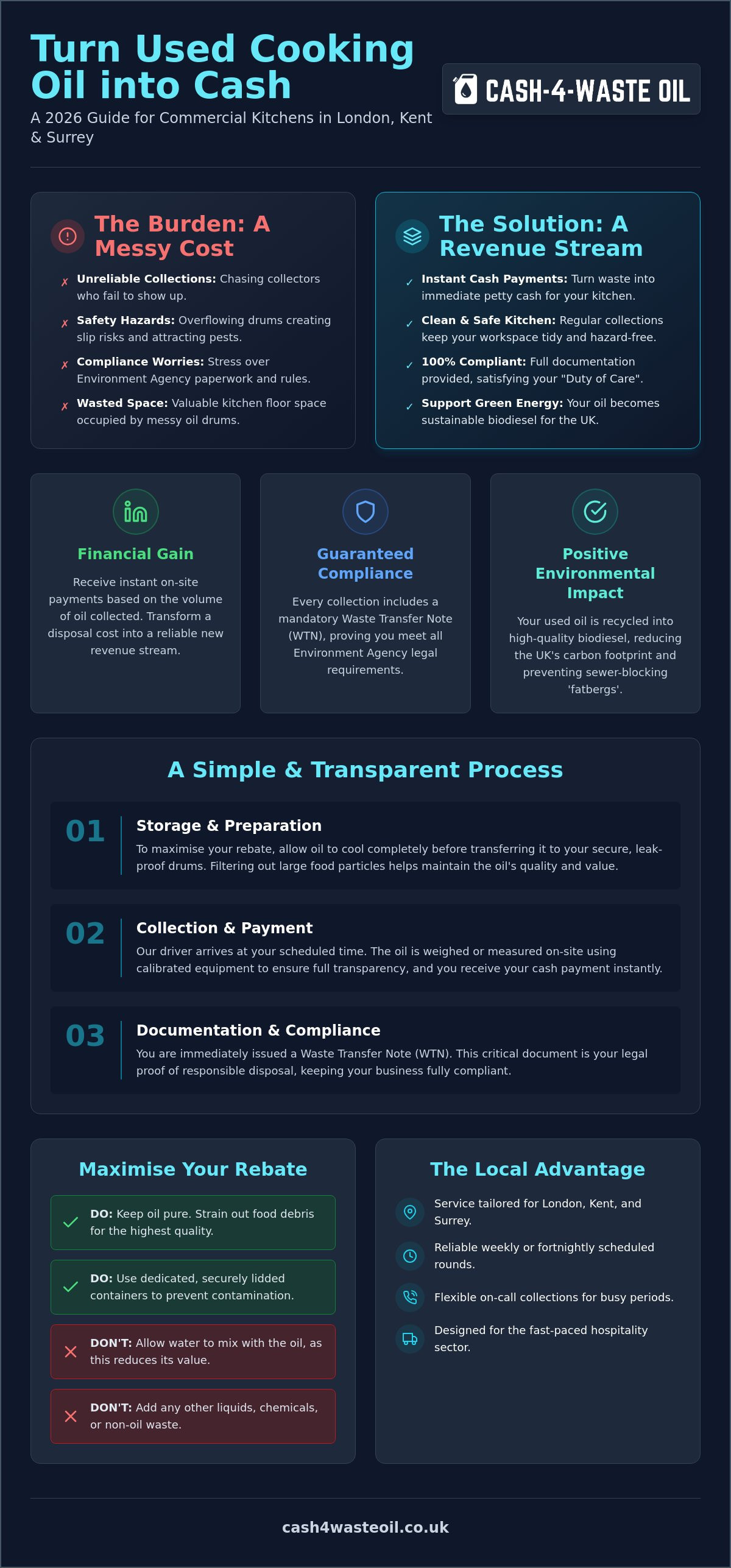
The process of turning waste into profit begins at the fryer. To get cash for cooking oil at the highest possible rebate rate, you must maintain the quality of the liquid. Always allow the oil to cool completely before transferring it into storage containers. This prevents heat damage to the drums and reduces the risk of burns for your staff. Filtering out large food debris during the transfer is also a smart move, as high levels of contamination can lower the value of your rebate. Using the correct used cooking oil storage solutions is vital; ensure your drums are leak-proof, fitted with secure lids, and stored in a location that is easily accessible for the collection vehicle but secure from tampering.
Step 2: Collection and Documentation
When the driver arrives at your London or Kent premises, the experience should be quick and transparent. Professional collectors use calibrated weighing or measuring equipment to determine exactly how many litres are being removed. This on-site verification is the only way to guarantee you receive a fair payment. Once the volume is confirmed, you will receive your payment. In 2026, transparency is more important than ever, and you must never let oil leave your site without a mandatory Waste Transfer Note (WTN). This document proves you've met your "Duty of Care" and will be essential for your records when the new Digital Waste Tracking Service becomes mandatory later this year. If you're ready to clear your yard and boost your petty cash, it's time to speak with a local waste oil specialist who values your business.
Consistency is what separates a professional service from an amateur one. By following these simple preparation steps, you ensure that every collection is handled safely, legally, and profitably. You get a clean kitchen, a full paper trail for the Environment Agency, and immediate funds to reinvest into your daily operations. It's a pragmatic solution for a modern kitchen.
Legal Compliance: The Critical Role of Waste Transfer Notes
Compliance is the foundation of a successful kitchen operation. While the primary goal for many managers is to get cash for cooking oil, doing so without the correct paperwork is a significant legal risk. Under the Environmental Protection Act 1990, every commercial kitchen in the UK has a "Duty of Care" regarding the waste it produces. This means you are legally responsible for your used oil from the moment it leaves your fryer until it reaches a licensed processing facility. If your waste is fly-tipped or disposed of illegally by an unlicensed collector, the authorities will trace it back to your business, leading to heavy fines or criminal prosecution.
A Waste Transfer Note (WTN) is your primary defence against these risks. It is a mandatory document that must be completed every time a load of waste oil leaves your premises. It details the type of waste, the quantity, and the details of both the producer and the carrier. You must keep a physical or digital copy of every WTN for a minimum of two years. Environment Agency inspectors or local council officers can demand to see these records at any time during a routine hygiene or waste audit. Without them, you cannot prove that you have disposed of your waste legally.
Verifying Your Collector’s Licence
Never hand over your oil to someone who cannot prove they are a registered waste carrier. You can easily check a company's credentials on the Environment Agency’s public register. A legitimate collector will always have a valid carrier licence and will never hesitate to show it. Be wary of red flags such as unmarked white vans, drivers without uniforms, or anyone offering to get cash for cooking oil whilst refusing to provide a WTN. "Cash only" deals without paperwork are untraceable and leave your business entirely unprotected during an audit.
2026 Compliance Standards for Kitchens
The regulatory landscape is shifting. From October 2026, the UK government is expected to roll out the mandatory Digital Waste Tracking Service (DWTS). This new framework will move waste reporting online, making it easier for regulators to spot illegal disposal patterns. To stay ahead of these changes, ensure your business follows a clear commercial kitchen oil disposal protocol. By using a professional service that already provides digital-ready documentation, you ensure your catering business meets the highest local council hygiene and environmental standards. It’s a simple way to protect your reputation whilst maintaining a tidy, profitable kitchen.
Maximising Your Rebate: Storage and Purity Best Practices
To get cash for cooking oil at the best possible rates, you must treat your used oil as a commodity. The purity of the liquid directly determines the rebate value. Refining companies require clean feedstock for biodiesel production, so the more contaminants your oil contains, the lower its market value. By implementing simple kitchen protocols, you ensure that every litre you store is worth the maximum amount when your collector arrives.
Water is the most common reason for a reduced rebate. It's often called the "No Water" rule. If rain gets into your drums due to loose lids, the oil becomes much harder to process. This leads to rejected collections or significant price deductions. Always keep your storage containers tightly sealed and, where possible, sheltered from the unpredictable British weather. Training your staff to replace lids immediately after pouring is a small habit that protects your profit.
Avoiding Cross-Contamination
Never mix your used vegetable oil with other substances. Mineral oils, engine oils, or hydraulic fluids will completely ruin a batch, making it unrecyclable. Even chemical cleaning agents used during a deep clean can alter the oil's chemical profile. To maintain a high grade, use a simple mesh filter when transferring oil from the fryer to the drum. This removes large food debris and prevents the "sludge" buildup that often settles at the bottom of containers, which collectors cannot pay for.
Safe Storage and Handling
Position your drums in a location that balances kitchen convenience with vehicle accessibility. Drivers need a clear path to reach the oil without navigating through obstacles or tight corridors. For environmental safety, use secondary containment or "bunding". A bund is a tray or wall designed to catch any leaks or spills before they reach the drains. This prevents costly environmental clean-up fees and keeps your site compliant with local regulations. If your storage area is nearing capacity or you've suffered a major spill, you may need an emergency waste oil collection in Kent to restore order quickly.
Managing your waste oil effectively is a simple way to boost your bottom line whilst keeping your kitchen tidy. If you want to see how much your clean, well-stored oil is worth, you can book your next oil collection today and benefit from our expert local service.
Why Choose Cash 4 Waste Oil for London, Kent, and Surrey
When you need to clear your yard and get cash for cooking oil, you shouldn't have to wait weeks for a bank transfer to clear. Most national waste providers operate on corporate cycles that don't suit the fast-paced nature of the hospitality industry. We do things differently. By choosing a local, specialised collector, you gain a partner that understands the immediate needs of South East kitchens. We combine professional, Environment Agency-compliant standards with the speed and reliability of a local business.
Our service is built on three pillars: transparency, legality, and promptness. We don't just take your oil; we provide a full audit trail from the moment we arrive. Every collection is backed by a guaranteed Waste Transfer Note, ensuring you stay on the right side of the law without any extra admin. By keeping our operations focused on London, Kent, and Surrey, we can maintain a schedule that national firms simply can't match. We also ensure that 100% of the oil we collect is recycled into high-quality UK biodiesel, supporting the circular economy right here at home.
Transparent On-Site Payments
The biggest frustration for many kitchen managers is the delay in receiving rebates. We've eliminated this hurdle by offering immediate, cash-on-site payments for every litre of clean oil we collect. This provides your business with instant petty cash to handle daily operational needs. Our rates are always fair and market-linked, rewarding kitchens that maintain high purity standards. For larger establishments with complex logistics, we offer hotel waste oil collection in London that features bespoke scheduling to avoid peak delivery times and guest disruptions.
Your Local South East Partner
Traffic in the South East is a constant challenge, but our drivers are experts at navigating the local landscape. Whether your business is tucked away in a Soho alleyway, situated in the heart of Camden, or located just off the M25 in Surrey, we know the routes that keep us on time. Reliability is our priority. You won't be left with overflowing drums because a driver got lost or stuck in a different county. We provide a personal, hassle-free service that removes the burden of waste management from your shoulders. Join hundreds of pubs, takeaways, and restaurants across the region that get cash for cooking oil whilst keeping their kitchens tidy and compliant. It's a smart, pragmatic business decision that pays off the moment we pull up to your door.
Secure Your Kitchen's Profit and Compliance Today
Transforming your used oil from a messy storage problem into a reliable revenue stream is a smart operational move for any South East business. By maintaining high purity standards and using correct storage protocols, you ensure your kitchen receives the best possible rebate. Remember that legal compliance isn't optional; keeping your Waste Transfer Notes for at least two years is essential for passing inspections and meeting your "Duty of Care" responsibilities under Environment Agency rules.
When you choose a local partner, you gain the peace of mind that comes with using an Environment Agency Registered Carrier who understands the unique logistical pressures of London, Kent, and Surrey. It's the most efficient way to get cash for cooking oil whilst supporting the UK's sustainable biodiesel industry. Don't let your profit sit in messy drums and take up valuable kitchen space for another week.
Book your free collection and get cash for your oil today to benefit from immediate cash paid on site and full legal WTN compliance. We're ready to help you streamline your waste management and boost your bottom line immediately.
Frequently Asked Questions
Is it really free to have my used cooking oil removed?
Yes, professional collection services for commercial kitchens are typically free of charge. The value of your used oil as a feedstock for the UK biodiesel industry covers the logistical costs of the vehicle and driver. You should never pay a removal fee to a reputable, licensed collector. Instead, your waste should be viewed as a resource that generates immediate value for your business.
How much cash will I get for my waste oil in 2026?
Rebate rates are linked to the fluctuating global commodities market and the current demand for biofuels. The exact amount you receive per litre depends on the total volume collected and the purity of the oil. To ensure you receive a fair, market-linked price, you should request a quote based on your average weekly output and oil quality. Most collectors provide this information transparently upon inquiry.
Do you provide a Waste Transfer Note at every collection?
Yes, providing a Waste Transfer Note (WTN) is a mandatory legal requirement for every single collection we perform. This document acts as your official proof of legal disposal and demonstrates that you have met your "Duty of Care" obligations. You must retain these notes for at least two years. They are essential for passing local council hygiene inspections and Environment Agency waste audits without facing penalties.
What areas of London, Kent, and Surrey do you cover?
We provide comprehensive collection coverage across all London boroughs, from central districts like Soho and Camden to outer areas. Our routes also extend throughout the entirety of Kent and Surrey, serving restaurants and pubs in towns like Maidstone, Canterbury, Guildford, and Woking. Because we are local to the South East, our drivers understand the specific traffic challenges of the M25 and central London red routes.
Can I get paid for small amounts of oil, like 20 litres?
Cash rebates are typically reserved for larger volumes, usually starting at 100 litres or more. Whilst we can collect smaller quantities to help keep your kitchen clear and tidy, the logistical costs mean a cash payment is often not viable for very low volumes. If you are a small takeaway or cafe, it's often more profitable to wait until you have several full drums before booking your collection.
Do you collect waste oil from domestic households?
No, our collection service is strictly for commercial waste producers. We do not offer residential oil recycling. If you are a domestic householder looking to dispose of old frying oil, you should contact your local council. Most local authority recycling centres have dedicated tanks where residents can safely deposit small amounts of household vegetable oil for recycling into green energy.
What types of cooking oil do you accept for cash rebates?
We accept all common vegetable-based oils, including rapeseed, sunflower, corn, and soy oil. To successfully get cash for cooking oil, the liquid must be as pure as possible. We cannot accept batches that have been contaminated with water, chemical cleaners, or mineral oils. Filtering out large food debris before storage will also help you secure the highest possible rebate rate for your waste.
What happens if I don’t have a Waste Transfer Note for my oil disposal?
Operating without a valid WTN leaves your business vulnerable to heavy fines and criminal prosecution. If the Environment Agency or your local council conducts an inspection and you cannot prove where your waste oil went, you are held legally responsible for its disposal. This is true even if an unlicensed collector told you they would dispose of it correctly. Paperwork is your only protection against these liabilities.