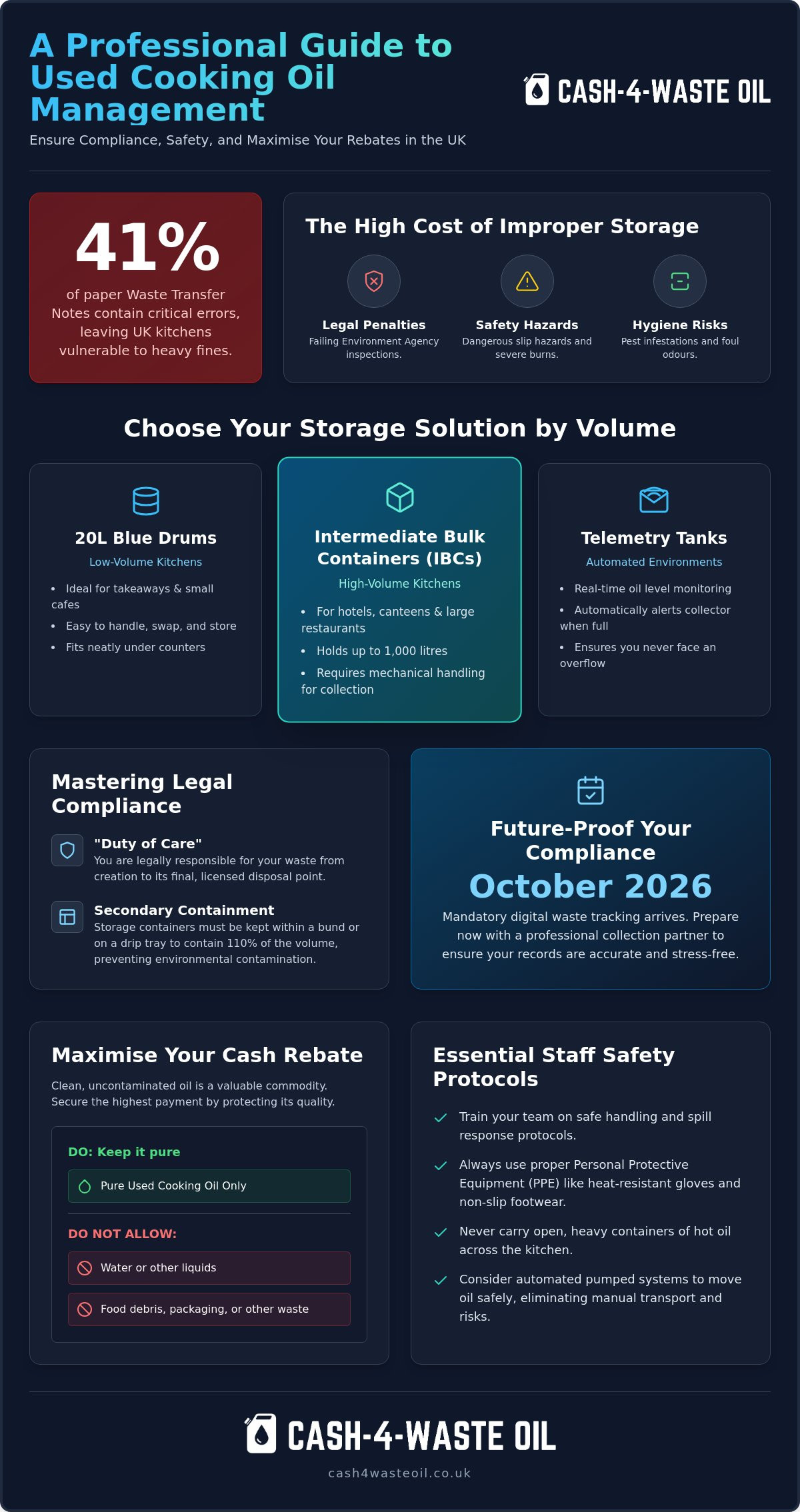
Did you know that 41% of paper Waste Transfer Notes currently contain errors, leaving UK kitchens wide open to heavy fines? It is a staggering figure that highlights how easily compliance can slip through the cracks when you are busy running a service. Between managing a fast-paced team and maintaining hygiene standards, finding the right used cooking oil storage solutions often falls to the bottom of the priority list. However, poor storage leads to more than just clutter. It creates dangerous slip hazards, attracts pests, and puts your business at risk of failing Environment Agency inspections.
You deserve a kitchen that is clean, odour-free, and legally sound. We know that space is at a premium and paperwork is a chore you would rather avoid. This guide shows you exactly how to safely store and organise your waste oil to maximise your kitchen's efficiency. You will learn how to prepare for the mandatory digital waste tracking arriving in October 2026 and how to turn your waste oil into instant cash. Discover how the right setup keeps you compliant whilst putting money back into your business.
Key Takeaways
- Identify the most efficient used cooking oil storage solutions for your specific kitchen layout and weekly oil production levels.
- Master the legal requirements for secondary containment and "Duty of Care" to protect your business from Environment Agency penalties.
- Train your team on safe handling protocols and the use of proper protective equipment to eliminate kitchen slips and burns.
- Learn how to keep your waste oil free from contaminants like water and food debris to secure the highest possible cash payments.
- Prepare for the October 2026 shift to mandatory digital waste tracking to keep your compliance records accurate and stress-free.
Understanding Commercial Used Cooking Oil Storage Solutions
Used cooking oil storage isn't just about finding a spare corner for a bin. It is the critical process of containing waste fats and oils between fryer changes and professional collection. For a busy kitchen, effective used cooking oil storage solutions act as a strategic buffer. They keep your operations running smoothly without the risk of mess or legal complications. Think of your storage area as a temporary holding cell for a valuable commodity.
Professionals often refer to this material as "yellow grease" once it has been filtered and processed. Understanding Used Cooking Oil (Yellow Grease) helps clarify why this waste is so sought after in global markets. By maintaining clean storage, you participate in the circular economy. Your waste oil becomes high-quality feedstock for biodiesel, which can reduce carbon emissions by as much as 88% compared to traditional fuels. It is a smart business decision that benefits both your bottom line and the environment.
Don't rely on standard plastic buckets. They are entirely insufficient for commercial kitchen volumes. These containers often melt under high heat, crack during transport, and offer zero protection against major spills. Your storage setup has three primary jobs: fire safety, pest control, and preventing environmental contamination. If your containers can't meet these three criteria, they aren't fit for purpose.
Why Proper Storage is Vital for London Kitchens
Space in Soho or Camden is a luxury. You cannot afford bulky, inefficient containers that clutter your prep areas. Vertical used cooking oil storage solutions save vital floor space whilst keeping your kitchen tidy. In high-density urban centres, unsecure outdoor bins are also frequent targets for oil theft. This isn't just a nuisance; it is a loss of potential revenue. Secure, lockable tanks prevent this loss. Airtight seals are equally essential. They stop pungent odours from attracting pests, which keeps your neighbours and health inspectors happy.
The Different Tiers of Storage Equipment
Choose your equipment based on your weekly output to ensure efficiency. Most businesses fall into one of three categories:
- Standard 20-litre blue drums: Ideal for low-volume takeaways. They are easy to handle, swap, and store under counters.
- Intermediate Bulk Containers (IBCs): Necessary for high-volume hotels and canteens. These large units hold up to 1,000 litres and require mechanical handling for collection.
- Telemetry tanks: These specialised systems monitor oil levels in real-time. They are designed for automated environments and alert your collector when the tank is nearly full, ensuring you never face an overflow.
Selecting the Ideal Storage Container for Your Kitchen Layout
Selecting the right equipment requires a cold, hard look at your kitchen’s logistics. It isn't just about the initial price. You must balance your available floor space against staff safety and collection frequency. A poorly chosen setup leads to bottlenecks, whilst the right choice streamlines your entire waste management process. Start by conducting a simple audit of your weekly oil output. Producing 60 litres a week is a different beast than producing 600. High-volume kitchens need larger used cooking oil storage solutions to avoid daily overflows, but these units require a dedicated footprint that doesn't obstruct fire exits or prep areas.
Logistics and access are equally vital. Can a collection van get within five metres of your storage area? If your storage is tucked away in a narrow alleyway or a locked courtyard, your staff will spend hours dragging heavy drums across the premises. This wastes valuable labour time and significantly increases the risk of spills. If you produce high volumes, consider the cost versus the benefit of automated systems. Whilst manual pouring is cheaper upfront, automated pumps reduce labour costs and virtually eliminate the risk of burns or slips in the kitchen.
Staff safety is your most important metric. Carrying open containers of oil is a recipe for disaster. If your storage is located in a basement or on an upper floor, look for pumped systems that move the oil through fixed pipes. This removes the need for staff to navigate stairs with heavy, slippery loads. Choosing the wrong container can lead to fines or injuries. A reputable used cooking oil collection partner can help you audit your layout to find the most efficient fit for your specific site.
Indoor vs Outdoor Storage: Pros and Cons
Outdoor bins are excellent for keeping odours and mess out of the kitchen. However, they must be securely locked to prevent oil theft or contamination from rainwater. Indoor tanks keep the oil at a stable temperature, preventing it from thickening in winter. This makes the oil much easier to pump during collection. For any bulk storage, you must follow UK oil storage regulations regarding secondary containment. This means using bunded pallets or double-walled tanks that can hold 110% of the main tank's capacity to catch leaks before they reach the drains.
Material Matters: Stainless Steel vs Polyethylene
Stainless steel tanks are the gold standard for durability. They withstand high temperatures and are easy to steam-clean, which is essential for maintaining hygiene standards. Polyethylene (high-density plastic) is the most common choice for used cooking oil storage solutions due to its cost-effectiveness. It is lightweight and resistant to corrosion, making it perfect for most commercial environments. Plastic drums are also easier to replace if they become damaged or heavily soiled over time.
How to Manage Used Fryer Oil Collection Safely and Efficiently
Even the best used cooking oil storage solutions fail if your team lacks a clear protocol for moving waste. Safety starts at the fryer. You must establish a rigid schedule for oil changes to prevent frantic, last-minute handling during peak service hours. Training your staff is the only way to avoid costly burns and slips. Ensure everyone uses proper Personal Protective Equipment (PPE), including heavy-duty heat-resistant gloves, long aprons, and eye protection. A single slip in a busy kitchen can lead to weeks of staff absence and potential liability claims.
Before any movement begins, ensure the path from the fryer to your storage area is completely clear. Any debris or kitchen equipment in the way creates a trip hazard. If you are handling oil manually, this is where the highest risk lies. You should also consider the reliability of your service provider. Knowing who collects used cooking oil in your area allows you to choose a partner that understands your specific equipment and safety needs.
Step-by-Step: Moving Oil from Fryer to Tank
Never move hot oil. This is a non-negotiable rule. Allow the oil to cool to a safe temperature, ideally below 40°C, before attempting to drain it. Handling hot fats increases the risk of severe burns and can damage certain types of plastic storage drums. Use a dedicated filtration machine or a heat-resistant transfer caddy to move the liquid. These tools are far safer than carrying open pots across a greasy floor. Always use a large funnel when pouring oil into your tank. This simple step prevents spills and keeps the exterior of your used cooking oil storage solutions clean and free from sticky residue.
Maintaining Your Storage Area
Your storage area requires daily attention to stay compliant with UK government oil storage regulations. Conduct a quick visual check every morning for leaks, cracks, or signs of wear in your drums. If you spot a breach, act immediately. Every kitchen should have a professional spill kit containing absorbent pads and booms specifically designed for oil. Keep the area around your tank free of cardboard boxes and general waste. A clean, accessible storage site ensures your collector can work quickly and safely, which is vital for maintaining a reliable collection schedule.
Compliance and Legal Obligations for Waste Oil Storage in the UK
Compliance is the backbone of any professional kitchen operation. Under the Environmental Protection Act 1990, every UK business has a "Duty of Care" regarding its waste. This means you are legally responsible for your oil from the moment it enters your fryer until it is processed by a licensed facility. Your choice of used cooking oil storage solutions plays a central role here. If your oil leaks into the ground or enters the public drainage system, the Environment Agency can issue substantial fines or even pursue prosecution. You must ensure that your storage area is secure and that your containers are fit for purpose.
For businesses storing oil in bulk, secondary containment is a strict legal requirement. This usually involves a "bund," which is a secondary wall or tray designed to catch leaks. This setup must be able to hold at least 110% of the maximum capacity of your storage tank. Proper grease management is also vital for the health of urban infrastructure. In cities like London, improper disposal leads to the formation of "fatbergs" in the sewer system. These massive blockages cost millions to clear and often result from kitchens that lack adequate used cooking oil storage solutions or filtration protocols. Staying compliant isn't just about avoiding fines; it is about being a responsible member of your local business community.
Documentation is your only shield during an inspection. Using a free commercial cooking oil collection service is a smart move, provided they give you the correct legal paperwork. Without a valid record of where your waste went, you are vulnerable to legal action.
The Role of the Waste Transfer Note (WTN)
A Waste Transfer Note (WTN) is your legal proof of disposal. Every time a collector picks up your oil, they must provide this document. It contains details about the waste type, the quantity, and the parties involved in the transfer. You are legally required to keep these records for at least two years. Current data shows that 41% of paper WTNs contain errors, which can lead to compliance failures. We automate this process for you, ensuring every collection is backed by accurate, professional documentation that satisfies Environment Agency inspectors. This transition will become even more critical when mandatory digital waste tracking is introduced in October 2026.
Licensed Waste Carriers: Why it Matters
Never hand your oil over to an unlicensed "rogue" collector. These individuals often fly-tip waste to avoid processing fees, and if the oil is traced back to your kitchen, you are the one held liable. Your Duty of Care requires you to verify that your collector is an Environment Agency registered waste carrier. You can easily check a company's registration number on the official government website. Using a reputable partner ensures your waste enters the circular economy safely. If you want to ensure your kitchen meets every legal standard, book a compliant waste oil collection with a licensed expert today.
Maximising Your Rebate: Why Professional Storage Pays Off
Storage is more than a compliance exercise. It is a direct influence on your kitchen's profitability. Professional used cooking oil storage solutions turn a waste problem into a reliable revenue stream. Collectors value "clean" oil that is free from excessive food debris and water. When your oil is uncontaminated, it requires less processing to become biodiesel, which allows for higher rebates. If you let your oil sit in open, unsealed containers, you aren't just risking a mess; you're actively losing money.
Proper lids and airtight seals are your best defence against value loss. Rainwater is the most common contaminant for outdoor tanks. Even a small amount of water in your waste oil can significantly lower its market value and make it harder to process. We specialise in helping kitchens across London, Kent, and Surrey maintain high-quality oil for maximum returns. By choosing "Cash on the Spot" services, you improve your kitchen's immediate cash flow. You get paid the moment the oil is collected, rather than waiting weeks for an invoice to clear.
Quality Control in Your Storage Tank
Maintain the integrity of your waste oil by keeping it isolated from other kitchen waste. Never mix used cooking oil with engine oil, cleaning chemicals, or general food waste. These contaminants make the oil useless for biodiesel production. You should also monitor the level of "free fatty acids" (FFA). High FFA levels, often caused by overheating oil or leaving it in the fryer too long, can reduce your rebate. Keep your oil "collection-ready" by using a basic mesh filter when pouring it into your used cooking oil storage solutions to remove large food particles.
Scheduling Collections for Efficiency
Your storage capacity should dictate your collection frequency. A small London pub with limited space might need a weekly pickup, whilst a large hotel can often wait for a monthly bulk collection. Don't wait until your tanks are overflowing to call for a pickup. Scheduled services are far more efficient than on-call requests, as they ensure you never run out of storage space during a busy weekend. If you're managing a high-volume site, you can get a professional hotel waste oil collection London quote to see how a tailored schedule boosts your bottom line. Regular, predictable collections keep your kitchen odour-free and your cash flow steady.
Future-Proof Your Kitchen Operations
Managing a busy commercial kitchen is demanding enough without worrying about messy spills or heavy regulatory fines. By implementing the right used cooking oil storage solutions, you transform a difficult chore into a streamlined, profitable system. You've seen how proper containment protects your staff from accidents and secures your business against the legal risks of improper disposal. Keeping your waste oil clean and well-protected isn't just about hygiene; it directly impacts the instant cash rebate you receive on-site.
We take the stress out of compliance for hospitality businesses across London, Kent, and Surrey. As an Environment Agency registered carrier, we provide full Waste Transfer Notes for every collection, ensuring you're prepared for the mandatory digital tracking changes arriving in October 2026. Don't let your waste oil sit as a liability when it could be a valuable asset. Get cash for your waste oil today with Cash 4 Waste Oil and enjoy a cleaner, safer, and more profitable kitchen. It's time to make your waste work for you.
Frequently Asked Questions
Can I store used cooking oil in the original plastic containers?
You can use original containers for very small volumes, but they aren't recommended for professional used cooking oil storage solutions. These plastic bottles are thin and prone to melting if the oil is still warm. They also lack the secure seals needed to prevent odours and pests in a busy commercial kitchen.
How long can I store used cooking oil before it goes off?
You can typically store waste oil for up to six months if it's kept in a cool, dark place with a tight seal. However, oil degrades over time, increasing the Free Fatty Acid (FFA) content. High FFA levels lower the quality of the oil for biodiesel production, which can reduce the cash rebate you receive.
Is it illegal to store waste oil outside in the UK?
It's perfectly legal to store waste oil outside, provided the area is secure and the containers are correctly bunded. You must ensure that any outdoor used cooking oil storage solutions are locked to prevent theft and sealed to stop rainwater from contaminating the oil and lowering its value.
What happens if my used cooking oil storage tank leaks?
You are legally responsible for any environmental damage caused by a leak on your premises. If your tank breaches, you must use a spill kit immediately to contain the liquid and prevent it from reaching the drains. Failure to manage a spill can lead to heavy fines from the Environment Agency under your "Duty of Care" obligations.
Do I need a special permit to store waste cooking oil on my premises?
You don't usually need a specific permit to store waste oil on your premises, but you must follow the UK's oil storage regulations. Your main legal requirement is to ensure the waste is collected by a licensed carrier who provides a valid Waste Transfer Note for your records to prove legal disposal.
How much oil do I need to store before I can get a free collection?
Most professional collectors require a minimum volume, typically between 60 and 100 litres, to qualify for a free collection and a cash rebate. This usually equates to three or four standard 20-litre drums. Smaller volumes may still be collected, but you might not receive a financial return for the waste.
Can I mix different types of vegetable oil in the same storage container?
You can mix different types of vegetable-based oils, such as rapeseed, sunflower, and palm oil, in the same container. However, you must never mix vegetable oil with engine oil, mineral oils, or cleaning chemicals. Contaminated oil cannot be recycled into biodiesel and will be rejected by professional collection services.
What is the best way to clean a used cooking oil storage bin?
The most effective way to clean a storage bin is with hot water and a heavy-duty commercial degreaser. Ensure you don't allow the greasy wash-water to enter the public drains, as this is illegal. Many kitchens find it more efficient to swap old drums for clean ones provided by their collection partner.