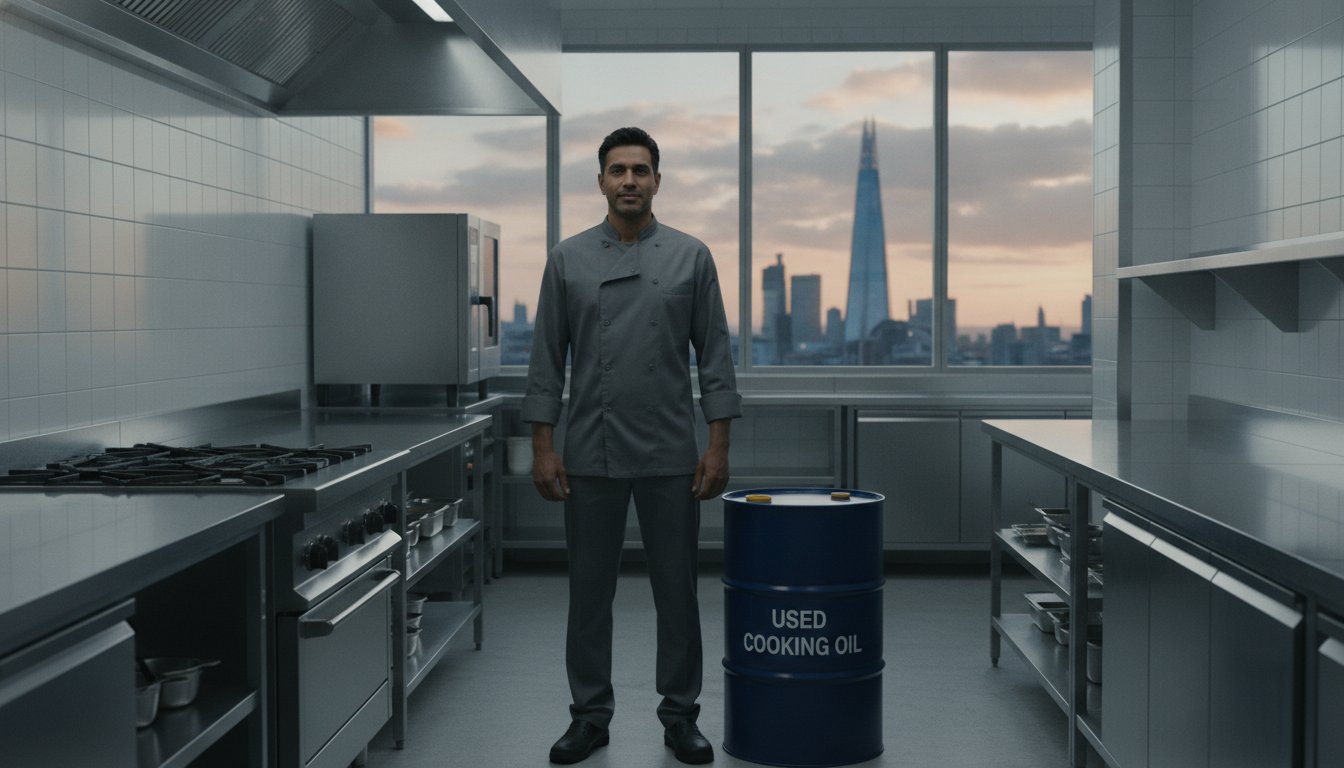
Is your kitchen yard currently doubling as a storage site for unsightly, leaking oil drums that you're paying to have removed? Most chefs and managers see used grease as a messy liability, but in reality, your waste is a valuable commodity in the UK's growing renewable energy market. Securing a free commercial cooking oil collection shouldn't be a logistical nightmare or a risk to your business's reputation. You already have enough to manage without worrying about whether your waste carrier is licensed or if your yard will be left in a state after a pickup.
We understand that your priority is a clean, compliant workspace that operates without friction. This guide explains how to turn that stack of drums into a revenue stream whilst meeting every Environment Agency requirement for 2026. We'll show you how to guarantee total legal compliance with Waste Transfer Notes, avoid fines of up to £5,000, and ensure your oil is collected on a reliable schedule that keeps your yard clear. From understanding minimum volume thresholds to securing instant cash payments, you're about to transform your waste management from a chore into a profit centre.
Key Takeaways
- Identify your legal "Duty of Care" and the mandatory documentation required to protect your business during Environment Agency inspections.
- Explore the rebate process that converts used cooking oil into instant cash payments for independent pubs and takeaways.
- Secure a free commercial cooking oil collection that removes unsightly drums and provides a professional, mess-free service.
- Implement storage best practices to prevent leaks and ensure your kitchen yard remains accessible for scheduled collections.
- Learn the benefits of choosing a local partner capable of navigating London’s ULEZ and complex traffic regulations for faster service.
What is Free Commercial Cooking Oil Collection?
A professional waste oil recovery service is a business-to-business logistics solution designed specifically for the hospitality and food manufacturing sectors. Unlike standard refuse pickups, a free commercial cooking oil collection focuses on the retrieval of used vegetable oils and fats that are no longer fit for frying. This isn't just about waste removal; it's a specialised recovery process that diverts liquid waste away from landfills and drainage systems. Because used oil has a market value as a raw material, reputable collectors can offer this service at no cost to the kitchen, provided specific volume thresholds are met.
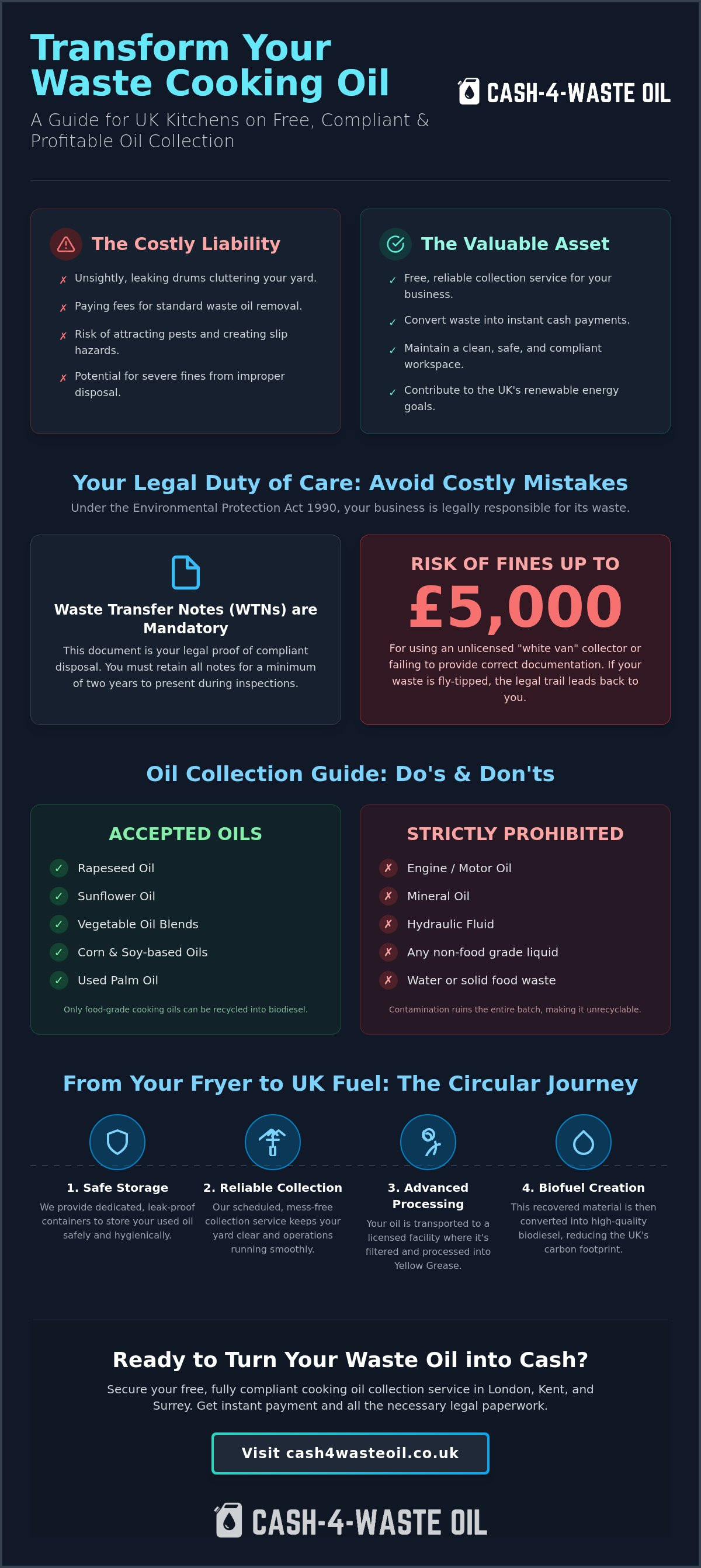
The "free" nature of the service is now the industry standard for commercial vegetable oils in the UK. This is because the oil you discard is a valuable feedstock for the renewable energy sector. This recovered waste, often referred to in the industry as Yellow grease, is a vital component of the UK's circular economy. Once collected, it's filtered and processed into high-quality biodiesel. This process helps the UK meet its Renewable Transport Fuel Obligation (RTFO) by reducing the carbon footprint of the transport sector. For your kitchen, this means your waste management becomes a practical contribution to environmental sustainability without adding a line item to your overheads.
The Types of Oil We Collect
We focus exclusively on organic, food-grade oils used in commercial catering. This includes rapeseed, sunflower, corn, and vegetable oil blends. We also collect used palm oil and soy-based oils. It's vital to distinguish these from mineral or engine oils, which are strictly prohibited in our collection containers. Mixing even a small amount of motor oil or hydraulic fluid with your cooking grease contaminates the entire batch, making it impossible to recycle into biodiesel. You'll know your oil is ready for collection when it has reached its smoke point or has developed a dark colour and bitter odour that affects food quality.
Why Kitchens Cannot Use Regular Waste Bins
Dumping used oil into general waste bins or pouring it down commercial drains is a recipe for legal and operational disaster. When oil enters the UK sewage system, it congeals and binds with other debris to create "fatbergs." These massive blockages cause sewer backups and environmental contamination. Under the Water Industry Act 1991, water companies have the power to issue heavy fines and recharge businesses for the cost of clearing blockages. Beyond the legal risks, improper storage in standard bins attracts pests and creates significant slip-and-trip hazards. Using dedicated, leak-proof containers is the only way to maintain a safe, hygienic, and compliant kitchen yard.
Understanding Legal Compliance: Waste Transfer Notes and Environment Agency Rules
Every food business in the UK holds a statutory "Duty of Care" regarding the waste it produces. This isn't a mere suggestion; it's a legal obligation under the Environmental Protection Act 1990. You're responsible for your used oil from the moment it leaves the fryer until it reaches a licensed recovery facility. Simply handing over drums to anyone who offers a free commercial cooking oil collection isn't enough to satisfy the law. You must ensure the collector is an Environment Agency (EA) registered waste carrier. Following official Waste cooking oil guidance helps prevent pollution and protects your business from being part of an illegal disposal chain.
The Waste Transfer Note (WTN) is your primary shield against prosecution. It's the physical or digital document that proves you've transferred waste to an authorised person. You're legally required to keep these notes for at least two years. If an EA officer or local council inspector visits your premises and you can't produce these records, you're liable for immediate fines. If you're looking for a partner who handles all the legal paperwork for you, consider a provider like Cash 4 Waste Oil to ensure your records are always in order.
Avoid "white van" collectors who lack formal credentials. If your waste is eventually fly-tipped, the legal trail leads directly back to your kitchen. The Environment Agency is strengthening its approach to liquid waste offences in 2026, meaning the risk of a £5,000 fine for using an unlicensed operator is higher than ever. Always ask for a collector's EA registration number and verify it on the public register before they touch a single drum.
What Must Be Included in Your Waste Transfer Note?
A valid WTN isn't just a receipt; it's a detailed legal record. It must include a clear description of the waste, typically using the European Waste Catalogue (EWC) code 20 01 25 for edible oil. It must also detail your business address, the carrier’s name, their specific registration number, and the site where the oil will be processed. When arranging a free commercial cooking oil collection, the presence of a complete WTN is the difference between a professional service and a legal liability.
Avoiding Fines and Prosecution
Audits are becoming more frequent as local authorities crack down on "fatbergs" and drainage issues. Councils often check waste records during routine hygiene inspections. Beyond the £5,000 fine for illegal disposal, pouring oil down drains can lead to unlimited fines if it causes significant sewer damage. Ensure your collection partner carries public liability insurance. This protects your property if a spill occurs during the loading process, keeping your yard clean and your budget intact.
How to Turn Waste into Capital: The Cash for Oil Process
Your used fryer grease isn't just a byproduct; it's a financial asset. While many national waste contractors treat oil removal as a standard utility service, a professional free commercial cooking oil collection operates on a rebate model. This means the collector pays you for the raw material you provide. Many larger firms use complex credit systems or monthly billing offsets that can be difficult to track. For independent pubs, restaurants, and takeaways, cash on the spot is the superior choice. It provides immediate liquidity and eliminates the administrative headache of chasing rebates through a corporate head office.
Transparency is the foundation of a fair trade. Reliable collectors use on-site weighing or calibrated volume verification to ensure you're paid for every single litre collected. The value of your oil fluctuates based on global commodity markets and the quality of the feedstock. By providing an instant payment alongside your legal paperwork, the process remains fast and predictable. This straightforward transaction respects your time and acknowledges that in a busy kitchen, cash flow is just as important as cleanliness.
The 4-Step Collection Process
We've refined the collection journey to minimise disruption to your service. The process follows a logical sequence designed for speed and accuracy:
- Step 1: Booking – Arrange your pickup via a quick phone call or online form. We'll fit into your kitchen's schedule.
- Step 2: Verification – The driver arrives and verifies the volume and quality of the oil in your storage drums.
- Step 3: Payment and Paperwork – You receive your instant cash payment. Simultaneously, the driver issues your Waste Transfer Note, ensuring you stay aligned with Food Standards Agency guidelines.
- Step 4: Transfer – The oil is pumped or loaded into the collection vehicle quickly, leaving your yard clear and mess-free.
Maximising Your Oil Rebate
To get the best possible rate for your waste, focus on oil purity. High levels of food debris, breadcrumbs, or water contamination can reduce the value of the batch because it requires more intensive refining. Store your oil in a dry area and keep lids tightly sealed to prevent rainwater from entering. Collecting larger volumes, such as 100 litres or more, often unlocks better rebate rates compared to frequent, smaller pickups. Setting up a regular schedule doesn't just help with kitchen organisation; it prevents the oil from degrading or becoming rancid, which preserves its value for biodiesel production.
Preparing for Collection: Storage Tips and Best Practices
Organising your kitchen yard is the first step toward a hassle-free collection. A cluttered or messy storage area slows down your team and creates unnecessary hazards. When you arrange a free commercial cooking oil collection, the goal is to make the transfer as seamless as possible. This starts with using the right equipment. High-quality, leak-proof blue barrels are the gold standard for the industry. They're durable, easy to seal, and designed to withstand the weight of liquid waste without buckling. Using these containers ensures that your oil remains contained and ready for transport at all times.
Safety must remain your top priority during the transfer from fryer to barrel. Never attempt to pour hot oil into storage containers. High temperatures can compromise the integrity of plastic drums and pose a severe burn risk to your staff. Wait for the oil to cool to a safe temperature before handling it. Additionally, be aware that used cooking oil has become a prime target for thieves due to its rising value in the biodiesel market. Secure your storage area with locks or CCTV where possible. If your oil is stolen, you lose the rebate and remain legally responsible for any environmental damage caused by the thieves during the theft.
Safe Storage Solutions
Choosing the correct container size depends entirely on your weekly output. Overfilled barrels are prone to spills and are difficult to move safely. Position your barrels on a flat, stable surface away from drains and high-traffic areas. This prevents accidental knocks and ensures that any minor drips don't enter the water system. Ensure all barrels are clearly labelled as waste vegetable oil to avoid cross-contamination with other kitchen chemicals. This level of organisation ensures that when the driver arrives, they can verify the volume quickly and issue your payment without delay.
Spill Prevention and Management
Even the most careful kitchens experience the occasional drip. Maintain a basic spill kit containing absorbent granules, sand, or clay-based pads to tackle minor leaks immediately. Keeping your collection area clean prevents slips and maintains your professional reputation. It also prevents vermin from being attracted to your premises, which is a key concern for environmental health inspections. At Cash 4 Waste Oil, we prioritise a clean collection centre because we know a messy yard is a safety risk. Our drivers are trained to handle transfers with precision, ensuring your premises remain exactly as we found them. To upgrade your kitchen's waste management and secure your next payment, book your free commercial cooking oil collection today.
Partnering with Cash 4 Waste Oil in London, Kent, and Surrey
Choosing a local partner for your free commercial cooking oil collection is a strategic business decision that directly affects your kitchen's efficiency. National waste providers often struggle with the specific logistical hurdles of the South East, from the strict enforcement of London’s Ultra Low Emission Zone (ULEZ) to the narrow access roads of rural Kentish villages. We've built our operation specifically to navigate these constraints. By keeping our service local, we ensure that the oil collected from your kitchen stays within the UK’s renewable energy supply chain. This supports domestic biodiesel production and significantly reduces the total carbon miles associated with your waste management.
Efficiency in the capital requires more than just a vehicle; it requires an intimate knowledge of local traffic patterns and site access restrictions. We understand that a collection vehicle blocking a narrow Soho alleyway during peak service is a disaster for your business. Our drivers are experts at timing their routes to avoid congestion and meet your specific delivery windows. This reliability is why kitchens across the South East trust us to handle their liquid waste without the delays or excuses common with larger, less agile contractors.
Serving Greater London, Kent, and Surrey
We provide rapid response times for high-volume kitchens in Soho, Camden, and central London, where space is at a premium and waste turnover is high. For rural pubs and hotels across Kent and Surrey, we operate reliable scheduled routes that ensure your yard never becomes cluttered with overflowing drums. We recently helped a Surrey-based pub group organise their waste by synchronising collections across five different sites. This turned their messy, uncoordinated storage areas into a streamlined revenue stream with a single, dependable point of contact for all their compliance paperwork.
Start Earning from Your Waste Today
Professional waste management should be simple and transparent. Our "No-Nonsense" promise means you won't deal with restrictive long-term contracts, hidden administration fees, or the frustration of delayed bank transfers. You receive a prompt arrival, a clean transfer, and an instant cash payment based on the volume of oil we collect. We handle every aspect of the Environment Agency paperwork, leaving you with a clear yard and the legal proof required for your next environmental health inspection. Don't let your used oil sit as a messy liability when it could be boosting your bottom line. Book your free oil collection in London, Kent, or Surrey today and experience a service built for the pace of the modern UK hospitality sector.
Streamline Your Kitchen Waste Management Today
Managing a busy kitchen is demanding enough without the added stress of messy oil storage and complex environmental regulations. You've seen how easy it is to transform a problematic waste stream into a reliable source of liquidity. By prioritising legal compliance and professional storage, you protect your business from hefty fines whilst contributing to the UK's renewable energy goals. A free commercial cooking oil collection should be a seamless part of your weekly routine; not a source of frustration.
As an Environment Agency Registered Carrier, we take the burden of paperwork off your shoulders. We provide full Waste Transfer Notes with every pickup to ensure you're always audit-ready. There are no hidden fees or complex credit notes; just a prompt, local service with cash paid on the spot for your used oil. Whether you're in central London or the heart of Kent, it's time to clear your yard and get paid for your waste.
Get a free collection and cash for your oil today and see why kitchens across the South East trust our no-nonsense approach. Let's make your waste work for you.
Frequently Asked Questions
Is commercial cooking oil collection really free?
Yes, a free commercial cooking oil collection is the standard for most UK kitchens that meet our minimum volume thresholds. Because your used oil is a valuable raw material for the biodiesel industry, we cover all logistics and labour costs. This allows you to clear your yard without any disposal fees whilst ensuring total legal compliance.
How much cash will I receive for my used cooking oil?
The rebate you receive depends on current global commodity market rates and the quality of the oil provided. We verify the volume on-site using calibrated equipment to ensure you're paid fairly for every litre. Purer oil with less food debris or water contamination typically achieves a better rate, and we provide instant cash payments during the pickup.
What areas of London and the South East do you cover?
We provide comprehensive coverage across Greater London, Kent, and Surrey. Our team is experienced in navigating central London districts like Soho and Camden, including ULEZ compliance and strict traffic windows. We also run regular routes through rural areas to service pubs, hotels, and catering units outside the M25.
Do I need a Waste Transfer Note for every collection?
Yes, you're legally required to obtain and keep a Waste Transfer Note for every single collection from your premises. This document is your only proof of compliance with the Environmental Protection Act 1990. We issue these notes instantly at the point of collection so you're always prepared for an Environment Agency audit.
Can you collect oil from a small takeaway or just large restaurants?
We collect from any commercial food business, including small independent takeaways, schools, and large restaurant chains. Size doesn't matter as much as the volume of oil you produce. As long as you meet our minimum collection threshold, we can provide the same reliable service and instant cash payments regardless of your business size.
What happens to the oil once it is collected from my kitchen?
Your waste oil is transported to a licensed facility where it is filtered and refined into sustainable biodiesel. This process is a key part of the UK circular economy, turning a messy waste product into a renewable fuel source. It's a practical way to reduce your kitchen's environmental impact whilst supporting the UK's green energy sector.
Do you provide the storage barrels for the waste oil?
Yes, we provide high-quality, leak-proof blue barrels as part of our service. These containers are designed specifically for the safe storage of used vegetable oils and help prevent spills in your kitchen yard. Using our dedicated barrels makes the collection process faster and ensures your oil stays uncontaminated for recycling.
What should I do if my oil has been contaminated with water or food?
Try to keep your oil as clean as possible by using tight lids and filtering out large food chunks. If your oil becomes contaminated with rainwater or heavy debris, its market value may decrease because it requires more intensive refining. If you're worried about a specific batch, just let us know when booking so we can advise on the best collection approach.