Your used cooking oil is currently either a hidden legal liability or an untapped revenue stream; there is no middle ground. If you are handing over your waste to anyone other than a licensed waste carrier for cooking oil, you are risking unlimited fines under the UK’s strict Duty of Care regulations. It's a common frustration for kitchen managers to deal with "cowboy" collectors who fail to provide proper documentation, leaving your business exposed to prosecution if that oil ends up in a drain or a fly-tip.
We know that you have enough on your plate without worrying about the 2026 UK waste mandates or chasing down missing Waste Transfer Notes. This guide explains how to quickly verify your collector’s credentials via the Environment Agency public register to ensure total legal compliance. You'll also learn how to streamline your paperwork and turn your waste vegetable oil into a consistent cash rebate. We'll show you how to swap the stress of unreliable collections for a scheduled, professional service that treats your waste like the valuable asset it is.
Key Takeaways
- Learn how to use the Environment Agency's public register to verify that your collector is a licensed waste carrier for cooking oil before your next scheduled pickup.
- Understand your legal Duty of Care and why retaining Waste Transfer Notes for a minimum of two years is your primary defence against regulatory scrutiny.
- Discover how to transform a messy disposal problem into a professional revenue stream by receiving competitive cash rebates for every litre of used oil collected.
- Identify the signs of "cowboy" collectors to protect your business from the hidden costs of drain blockages, pavement obstructions, and improper disposal fines.
- Get specific insights for kitchens in London, Kent, and Surrey to ensure your oil storage and collection frequency meet strict local council safety requirements.
What is an Environment Agency Registered Oil Collection Service?
An Environment Agency registered service is a business legally authorised to transport and manage "controlled waste". Under the Environmental Protection Act 1990, your used kitchen fats and oils are strictly classified as controlled waste. This isn't a mere suggestion; it's a legal designation that mandates a specific chain of custody. A licensed waste carrier for cooking oil must hold a valid registration to move this material from your premises to a processing facility. It's important to distinguish these food-grade vegetable oils from the industrial mineral oils used in the automotive sector. While both are regulated, the UK waste cooking oil collection framework is specifically designed to ensure kitchen waste enters the circular economy rather than contaminating the water supply.
The Duty of Care: Your Legal Responsibility
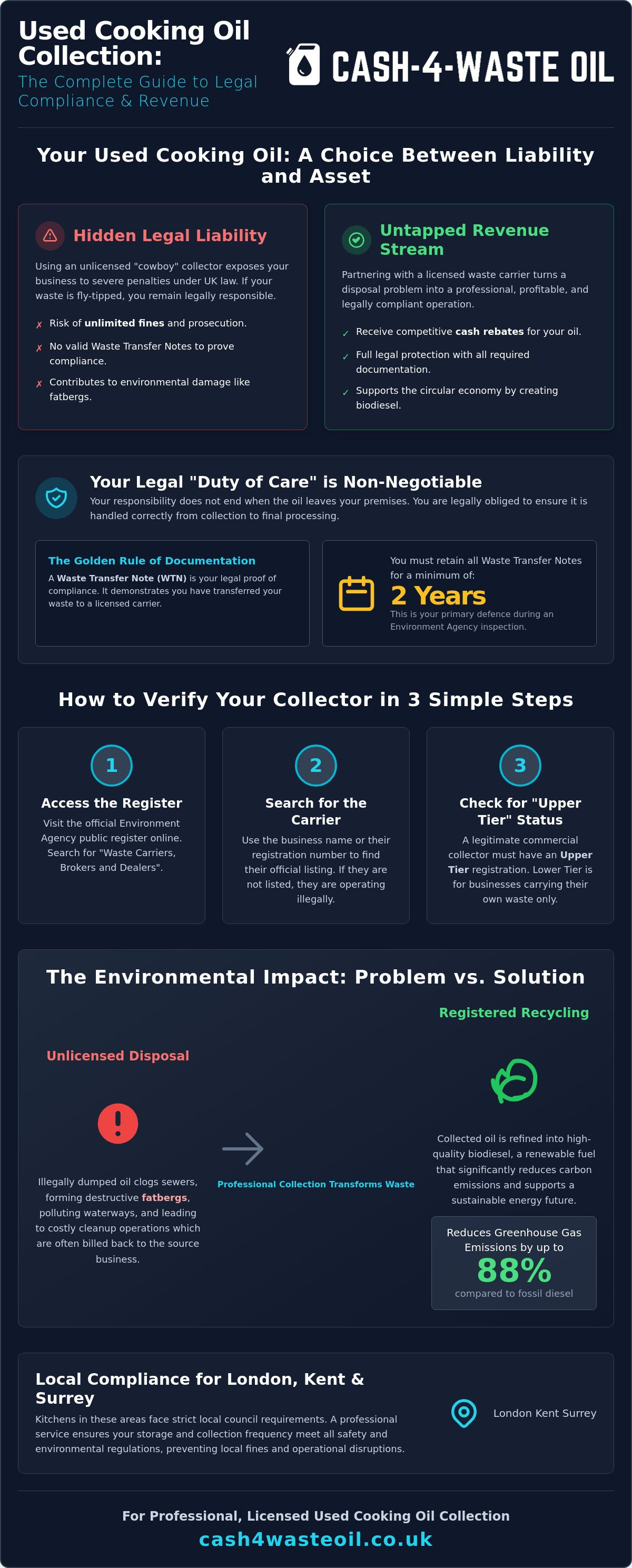
Many business owners mistakenly believe their liability ends the moment the oil leaves their kitchen. In reality, your "Duty of Care" is a permanent legal obligation that stays with you. If an unregistered collector takes your oil and later fly-tips it or pours it down a public drain, the Environment Agency can trace that waste back to your business. You're held responsible for the actions of the person you hired. In 2026, the penalties for failing this duty are severe. Businesses found using unlicensed carriers can face unlimited fines and potential prosecution. Using a registered carrier ensures you receive the correct documentation, which acts as your primary defence during a local council or Environment Agency inspection. It proves you've fulfilled your legal requirement to manage waste responsibly.
The Environmental Impact of Registered Collection
Professional collection transforms a problematic byproduct into a sustainable asset. Registered carriers across London and the South East don't just dispose of waste; they facilitate its journey to becoming carbon-reducing fuel. Once collected, the oil is transported to specialised refineries to be processed into high-quality biodiesel. This renewable fuel can reduce greenhouse gas emissions by up to 88% compared to traditional fossil diesel. Conversely, "cowboy" collectors operate without oversight. They often lack the proper storage containers to prevent spills and smells. Because they have no access to legitimate processing plants, they frequently dump oil in general waste bins or down sewers. This leads to the formation of fatbergs and catastrophic drain blockages. When these blockages occur, the repair costs and environmental cleanup fees are often passed directly back to the businesses responsible for the initial disposal.
How to Verify Your Waste Oil Carrier’s Registration in 2026
Trusting a collector's verbal promise is a gamble your business cannot afford to take. While many individuals may offer to take your oil for free, only a licensed waste carrier for cooking oil provides the legal protection required by the Environment Agency. If you can't verify their credentials, you remain legally liable for where that oil ends up. In a fast-paced kitchen environment, it's easy to overlook this step, but taking two minutes to verify a waste carrier's licence can save you from a £5,000 fine or even unlimited penalties for serious breaches.
It's vital to check for "Upper Tier" registration status. Lower tier registrations are typically reserved for businesses only carrying their own waste. Any commercial collector charging for service or providing a rebate must be listed as an Upper Tier carrier. This classification ensures they've paid the necessary fees, currently £191.02 for new applications as of July 2026, and have undergone the required background checks. If their name doesn't appear on the official register, they're operating illegally. Using a verified professional oil collection service ensures your compliance is never in question.
Step-by-Step Verification Guide
You don't need to be a legal expert to check a carrier's status. Follow these simple steps during your next collection:
- Access the official Environment Agency public register on your phone or tablet.
- Navigate to the "Waste Carriers, Brokers and Dealers" section.
- Search using the business name or their specific registration number, which usually starts with "CBDU".
- Confirm the registration is "Active" and check the expiry date; licences must be renewed every three years.
- Ensure the "Registration Tier" is clearly marked as Upper Tier.
Requesting Physical Proof on Site
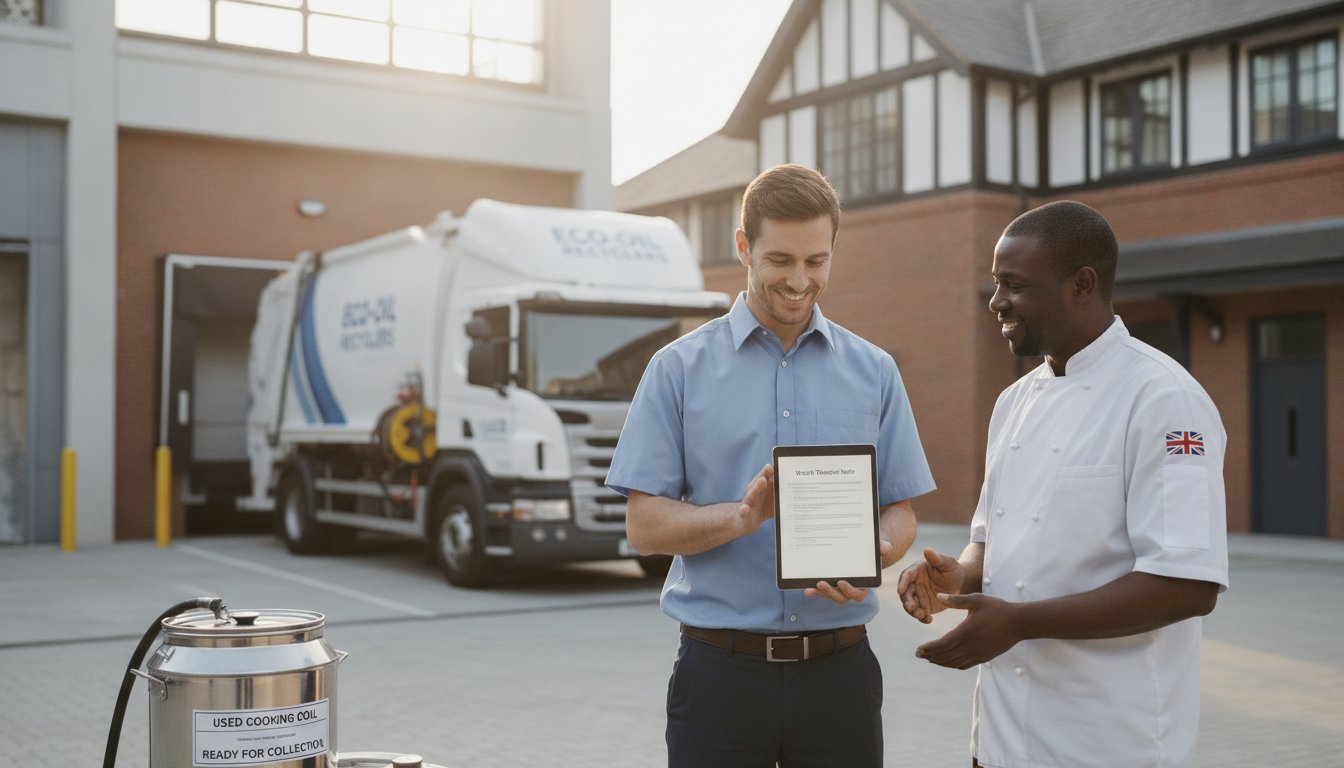
Legitimate carriers expect to be questioned. They'll always carry a digital or physical copy of their Environment Agency certificate for inspection. In 2026, many drivers use a digital ID card that you can scan to see their live status. Check that the name on the vehicle matches the registered business name on the certificate. If a collector arrives in an unbranded van, refuses to show ID, or doesn't know their registration number, these are major red flags. Don't let them take your oil. A genuine licensed waste carrier for cooking oil will be transparent about their credentials because they have nothing to hide. If they can't prove their legitimacy on the spot, they aren't the right partner for your kitchen.
The Role of Waste Transfer Notes in Legal Compliance
A Waste Transfer Note (WTN) is the single most important document in your kitchen's administrative files. Think of it as a legal receipt that confirms you've handed over your waste to an authorised professional. Without it, you have no evidence that you've fulfilled your legal Duty of Care. If a local authority inspector visits your premises, this is the document they'll demand to see first. Under UK law, you're required to retain every single WTN for a minimum of two years. Failing to produce these records can lead to immediate fines, as it suggests your waste may have been disposed of illegally.
The validity of a WTN depends entirely on the credentials of the person signing it. Only a licensed waste carrier for cooking oil is permitted to issue these documents for commercial collections. If you accept a handwritten note from an unregistered collector, it carries no legal weight. The Environment Agency views such transactions as a breach of your Duty of Care because you failed to verify the collector's status. Ensuring your collector is registered isn't just about the oil; it's about the legitimacy of the paperwork that protects your business from prosecution.
Essential Information on Your WTN
A compliant Waste Transfer Note must contain specific data to be legally binding. It isn't just a signed scrap of paper. Every note you receive must include:
- The correct EWC (European Waste Catalogue) code for used cooking oil: 20 01 25.
- Full contact details and addresses for both the producer (your kitchen) and the carrier.
- A precise description of the waste and the exact quantity collected.
- The carrier’s registration number and the final destination or disposal site where the oil will be processed.
Digital vs. Paper Waste Transfer Notes
By 2026, the shift towards digital record-keeping has become the industry standard for professional kitchens. While paper notes are still legal, they're easily lost, stained, or damaged in a busy kitchen environment. Digital WTNs provide an instant, searchable trail that's ideal for multi-site catering companies. They allow head office managers to monitor compliance across several locations from a single dashboard. For a full breakdown of what your staff should look for during a collection, refer to the catering company waste oil collection checklist. Switching to a digital-first approach ensures you're always ready for a surprise inspection without having to dig through old folders.
Why Licensed Collection Outperforms "Unregistered" Alternatives
Choosing a licensed waste carrier for cooking oil is a strategic business decision that extends far beyond simple compliance. While "unregistered" collectors might tempt you with immediate, no-strings-attached pickups, the hidden costs are staggering. If an unlicensed individual pours your waste down a manhole to avoid disposal fees, your business remains legally liable for the resulting fatbergs and blockages. Repairing commercial sewers is expensive. When combined with Environment Agency fines, that "free" collection could cost you thousands. Professional carriers provide a predictable, scheduled service that eliminates the risk of overflowing barrels and the foul odours that attract pests to your kitchen's rear entrance.
Refineries producing sustainable biodiesel only buy feedstock from registered providers. They require a transparent paper trail to meet the UK’s Renewable Transport Fuel Obligation, which stands at 16.415% for 2026. If your oil isn't collected by a licensed professional, it can't enter this high-value market. This is why unregistered collectors rarely offer competitive payments. By using a legitimate carrier, you ensure your waste becomes a certified asset that refineries are willing to pay for. It's the difference between being part of the circular economy and simply getting rid of a problem.
Legitimate Cash Rebates for Your Oil
Registration is the key that unlocks financial returns for your waste. Because a licensed waste carrier for cooking oil can prove the origin and quality of the oil, they have direct access to top-tier refineries. This transparency allows for the payment of rebates that unregistered "back-alley" operators simply cannot match. Under the "Cash 4 Waste Oil" model, your used vegetable oil is treated as a professional revenue stream rather than a disposal headache. You get paid because your oil is legally tracked and verified at every stage of the recycling process. To start earning from your waste, you can book a professional oil collection and receive a cash rebate today.
Professional Equipment and Safety Standards
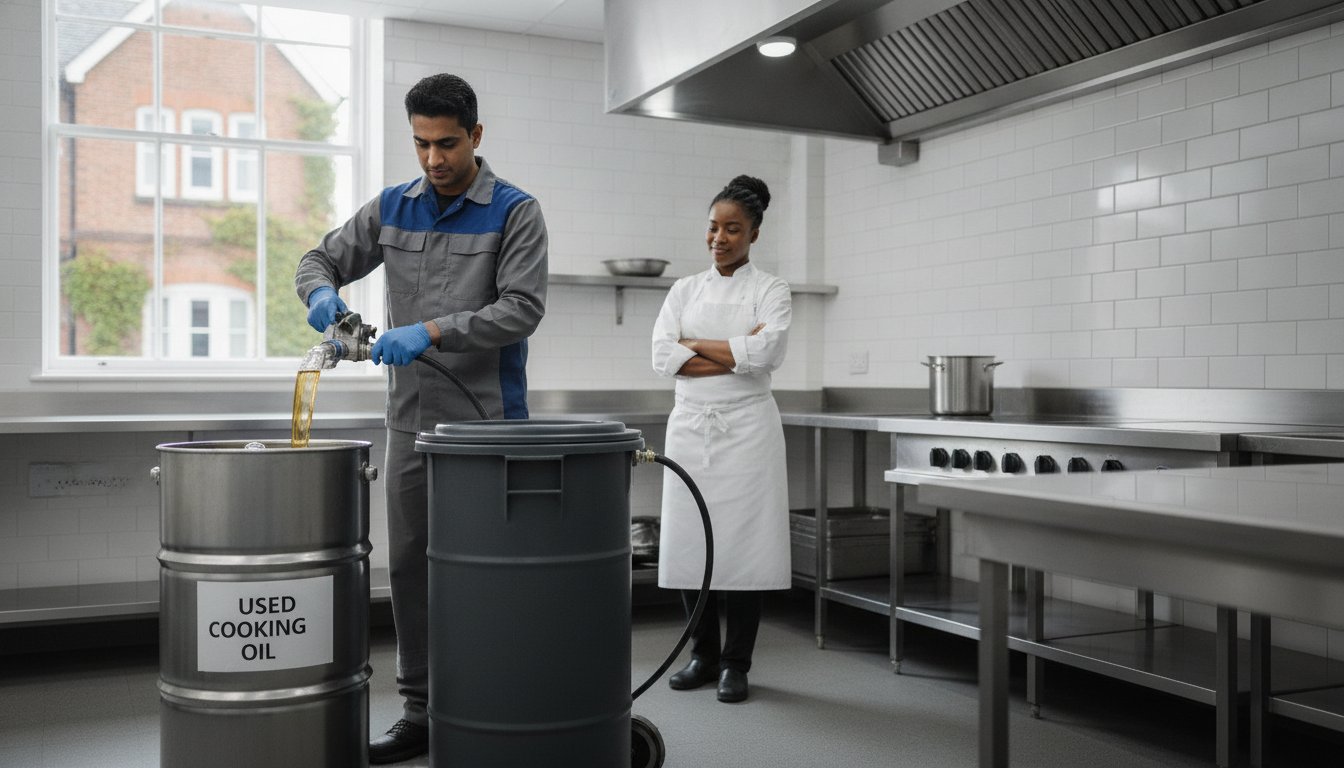
Hygiene is non-negotiable in the hospitality sector. Registered collectors invest in high-grade, leak-proof barrels and specialised vehicles designed for city centre operations. Unlike ad-hoc collectors who might use open containers or messy pouring methods, professionals use modern vacuum suction technology. This ensures a completely mess-free transfer from your storage area to the vehicle. It prevents oily residue on pavements, which is a major cause of slip hazards and council complaints in busy areas like London and Surrey. By maintaining these high standards, a professional service protects your kitchen’s reputation and ensures your back-of-house areas remain clean and compliant. You won't have to worry about the mess or the liability that comes with amateur handling.
Professional Registered Oil Collection Across London, Kent, and Surrey
Selecting a local partner who understands the nuances of regional council requirements is vital for smooth operations. A national provider often lacks the granular knowledge of specific street-level restrictions that can disrupt your kitchen's workflow. Whether you run a high-volume restaurant in Soho or a boutique hotel in the Kent countryside, working with a licensed waste carrier for cooking oil who knows your area ensures your waste is managed without causing friction with local authorities. Local knowledge means we know exactly when the bin lorries arrive and which back-alleys are accessible for collection vehicles.
London kitchens face intense scrutiny. Councils in boroughs like Soho, Camden, and Islington are particularly strict regarding pavement obstructions and waste storage. Leaving oil drums on a public footpath even for a few minutes can result in heavy fines. We understand these challenges. Our drivers are trained to navigate tight metropolitan schedules whilst ensuring full compliance with London’s Low Emission Zone (LEZ) requirements. This keeps your logistics green and your business out of the council's bad books. For larger establishments, you can find out more about hotel waste oil collection London to manage high-volume sites effectively.
Serving the South East: Kent and Surrey
Rural hospitality businesses in Kent and Surrey have different logistical needs. Pubs and hotels often experience sharp spikes in demand during peak seasons, leading to rapidly filling oil stores. A local fleet provides a significant advantage here. We can offer rapid response times that distant competitors simply can't match. If your storage capacity is reached unexpectedly, see our guide on emergency waste oil collection Kent for urgent needs. Our presence across the South East means we're never far away when you need a professional, registered service to clear your decks.
Get Started with Cash 4 Waste Oil
Securing your compliance and unlocking your rebate is a straightforward process. When you book your first collection, we handle the heavy lifting. Our team arrives, uses professional suction equipment for a mess-free transfer, and issues your Waste Transfer Note immediately. You get paid, and your legal compliance is secured in one visit. We don't hide behind complex contracts or vague promises. It's a transparent, efficient service designed for busy professionals who value their time. Contact our team today for a free site assessment and a competitive per-litre rebate. We'll show you how a licensed waste carrier for cooking oil can turn your waste into a reliable revenue stream without the hassle.
Secure Your Compliance and Start Earning Today
Managing your kitchen's waste shouldn't be a source of stress or legal risk. By choosing a licensed waste carrier for cooking oil, you're doing more than just clearing space in your storage area. You're ensuring that every litre of oil is documented with a valid Waste Transfer Note and processed into sustainable biofuel. This simple shift in your operations protects your business from the unlimited fines associated with improper disposal and transforms a messy byproduct into a professional revenue stream.
Don't settle for unreliable collectors who leave you without paperwork or skip scheduled pickups. We provide a fully Environment Agency licensed service (CBDU series) that prioritises your compliance and your bottom line. You'll receive instant Waste Transfer Notes for your records and top cash rebates paid on the spot. It's an efficient, transparent process designed to keep your kitchen running smoothly whilst supporting the UK's circular economy.
Ready to streamline your oil disposal? Book your Environment Agency registered oil collection and get paid today. It's the smartest way to handle your waste responsibly and profitably.
Frequently Asked Questions
Is Environment Agency registration mandatory for all oil collectors?
Yes, any individual or business transporting used cooking oil for others must be registered with the Environment Agency. It's a legal requirement under the Environmental Protection Act 1990. Handing your waste to an unregistered collector is a violation of your Duty of Care and leaves your business liable for any environmental damage or illegal dumping they might commit.
How much does it cost to use a registered waste oil collection service?
A professional collection service shouldn't cost your business anything; it should actually provide a financial return. While collectors pay their own registration and renewal fees to the Environment Agency, they offer you cash rebates for your waste. You're essentially selling a valuable feedstock that's in high demand for the UK's biofuel production industry.
What happens if I cannot provide a Waste Transfer Note during an inspection?
Failing to produce a Waste Transfer Note (WTN) during a local council or Environment Agency inspection can result in immediate fixed penalty notices or unlimited fines. These documents are your only legal proof that you've disposed of "controlled waste" correctly. Without them, authorities assume you've disposed of the oil illegally, which can lead to prosecution.
Can I sell my used cooking oil to anyone who offers cash?
No, you must only sell or hand over your oil to a licensed waste carrier for cooking oil. Accepting cash from an unlicensed collector is illegal. If that collector later dumps the oil in a drain or a field, the Environment Agency can trace the waste back to your kitchen, and you'll be held legally responsible for the cleanup costs and fines.
How do I check if a waste carrier licence is still valid?
You can verify a licence instantly by searching the Environment Agency’s public register using the carrier’s business name or their CBDU registration number. Check that the status is listed as "Active" and confirm the expiry date hasn't passed. Legitimate carriers are happy to show you their digital or physical registration certificate during a collection.
Does the Environment Agency registration cover both vegetable and engine oil?
While one carrier might be licensed for both, they are treated as entirely different waste categories. Used cooking oil is a non-hazardous vegetable-based product (EWC code 20 01 25). Engine oil is a mineral-based hazardous waste that requires specific permits and different disposal routes. You should never mix the two or use a cooking oil collector for automotive waste.
What is the difference between an Upper Tier and Lower Tier waste carrier?
An Upper Tier registration is the only valid category for a business that collects and transports waste produced by others, such as a commercial oil collector. Lower Tier registration is typically reserved for businesses that only transport their own waste. Always ensure your collector is Upper Tier to remain fully compliant with UK commercial waste laws.
How long should I keep my cooking oil waste transfer notes?
You're legally required to keep all Waste Transfer Notes for a minimum of two years. This applies to both physical paper copies and digital records. Keeping an organised file ensures you can quickly demonstrate your compliance during any surprise inspection and proves that your waste has been handled by a legitimate, authorised partner.