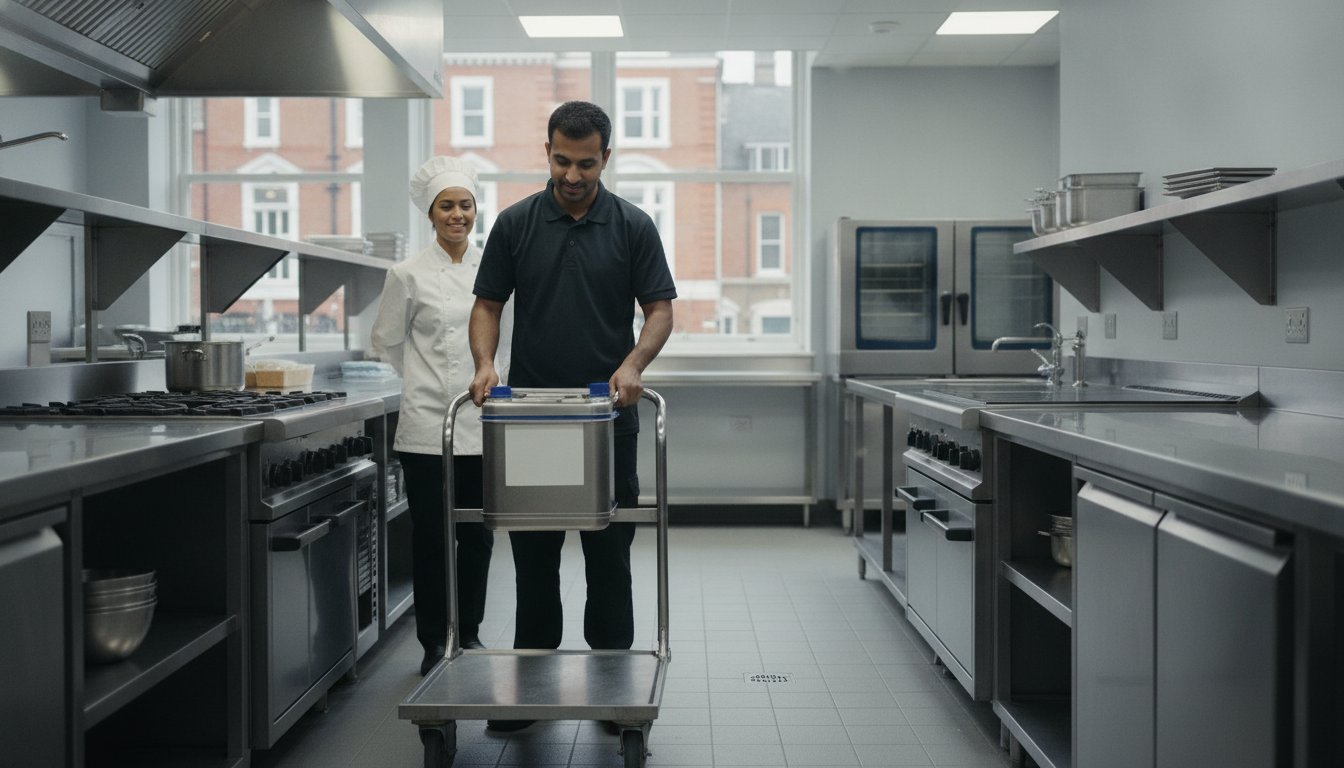
Is your kitchen's waste oil currently a source of profit or just a compliance headache? Most chefs and managers find that the used cooking oil price per litre UK market moves faster than a busy Saturday service. It’s frustrating to watch your rebate fluctuate whilst worrying if your collection partner will actually show up or provide the necessary Waste Transfer Note. You don't have time to chase collectors or risk legal action for improper disposal.
This guide cuts through the noise to show you exactly how to maximise your cash rebate and keep your kitchen fully compliant with Environment Agency rules. With the HoReCa sector now accounting for 65% of the used cooking oil market, your waste is a valuable asset that deserves professional management. We'll break down the latest 2026 market trends, explain how to avoid hefty fines, and show you the simple steps to turn your waste into a reliable revenue stream without the stress.
Key Takeaways
- Understand why your waste oil is a valuable feedstock for the biodiesel industry and how this drives current market demand.
- Identify how factors like oil purity and collection volume directly impact the used cooking oil price per litre UK businesses can secure.
- Compare local specialists with national aggregators to find the most reliable collection schedules and efficient payment models for your kitchen.
- Discover practical filtration and storage techniques that help you maximise your cash rebate whilst protecting the environment.
- Ensure total legal compliance with Environment Agency regulations by securing official Waste Transfer Notes for every single collection.
Understanding the Used Cooking Oil Price per Litre in the UK (2026)
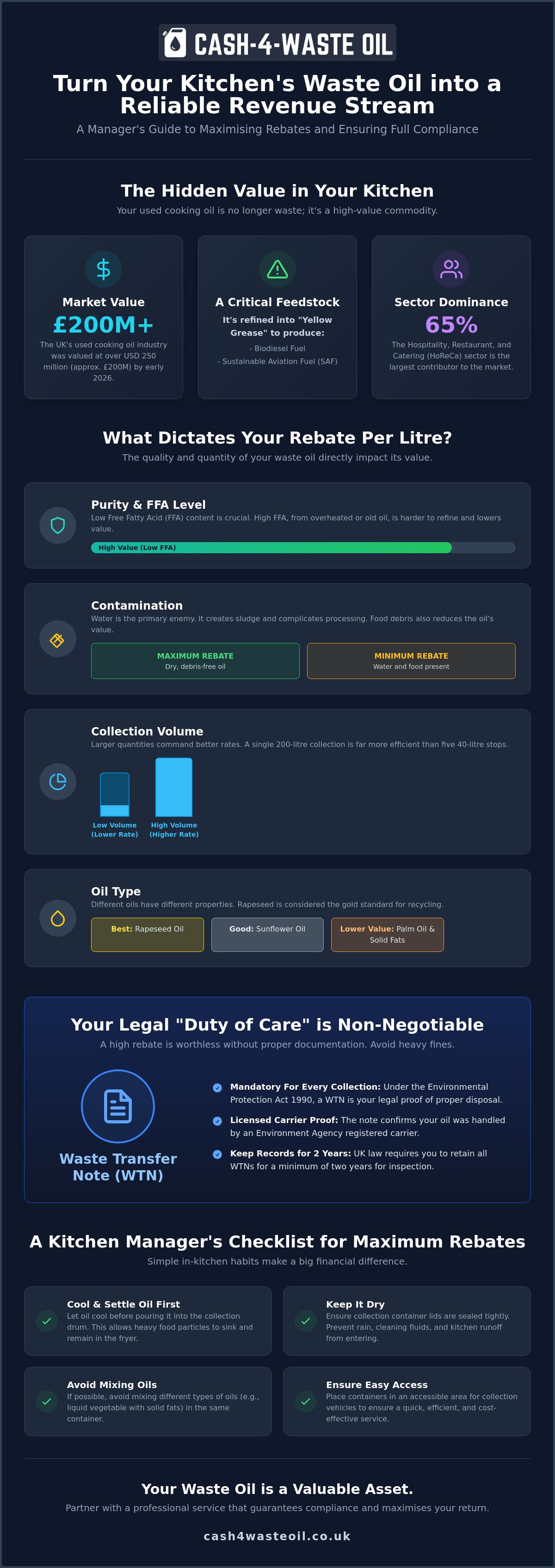
The UK market for waste oil has transformed into a high-value commodity sector. By early 2026, the industry reached a valuation exceeding USD 250 million, driven largely by the urgent demand for sustainable fuels. Your kitchen's waste is no longer a disposal problem; it's a vital resource. Specifically, the industry refers to this treated waste as Yellow grease, which serves as the primary feedstock for biodiesel and sustainable aviation fuel (SAF) production.
Biodiesel production now represents nearly half of the total market application for used oil. This massive industrial appetite means that the used cooking oil price per litre UK businesses can expect is tied directly to global energy trends. You must distinguish between "free collection" services and "paid rebate" models. Whilst some providers offer basic removal, a professional partner recognises the commercial value of your oil and provides a cash return. Any payment or collection service must be backed by an Environment Agency registration to ensure the transaction is legitimate and traceable.
Why do prices fluctuate in the UK?
Market rates aren't static. They respond to the volatility of global crude oil prices and the virgin vegetable oil markets. When the cost of fresh rapeseed or sunflower oil climbs, the demand for recycled alternatives usually intensifies. Supply levels also follow a seasonal rhythm. Hospitality hubs see a massive influx of oil during peak holiday periods, which can impact regional pricing. For instance, high-volume areas like London maintain different demand profiles compared to rural districts where collection logistics are more complex.
The role of the Waste Transfer Note (WTN)
A high rebate offer is a financial trap if it doesn't come with a valid Waste Transfer Note. Under the Environmental Protection Act 1990, your business holds a legal "Duty of Care" for every drop of waste produced. You're required to prove that your oil was collected by a licensed carrier and processed at an authorised facility. UK law mandates that you retain these notes for a minimum of two years to avoid heavy fines. Cash 4 Waste Oil prioritises your protection by providing official documentation on every collection, ensuring you stay compliant whilst you get paid.
Factors Influencing the Value of Your Waste Vegetable Oil
The used cooking oil price per litre UK kitchens receive isn't a fixed figure. It fluctuates based on the physical state and type of the oil you provide. If your oil is heavily contaminated with water or food debris, it requires intensive processing before it can be converted into fuel. This extra work increases costs for the recycler and lowers your potential rebate. To get the best return, you must understand the variables that collectors look for when they test your supply.
- Volume: Larger quantities generally command better rates. Collecting 200 litres in one stop is more efficient for a driver than making five separate stops for 40 litres each. If you have the space to store more oil safely, you can often negotiate a higher tier of payment.
- Purity: Refineries focus on Free Fatty Acid (FFA) levels. High FFA content usually signals that the oil was overheated or used for too long, which makes it harder to process into biodiesel.
- Oil Type: Rapeseed oil is often considered the gold standard for recycling due to its low cloud point. Sunflower oil is also highly valued. Palm oil blends or solid fats are less desirable because they require heating to remain liquid during the refining process.
- Contamination: Water is the primary enemy of waste oil value. It creates a sludge that is difficult to filter and can cause equipment damage during processing.
The Purity Premium: Getting the best rate
Getting the best rate requires a bit of discipline in the kitchen. Don't pour hot oil directly into the storage container; let it cool and settle first. This allows heavy food particles to sink to the bottom of the fryer rather than entering your waste drum. Avoid mixing different types of oil if you can. Keeping your oil "dry" and free from kitchen runoff is the fastest way to protect your profit margin. Simple habits like keeping lids tightly sealed between pours prevent moisture from entering the drum.
Storage and Accessibility
Your storage setup directly impacts service efficiency. Collections are faster and more cost-effective when containers are placed in an accessible area for transit vans. Following UK government regulations ensures your storage area is safe and compliant. Use standardised 20L or 60L containers that are easy to seal; this prevents leaks and stops "oil rustlers" from siphoning your liquid assets. If you want to ensure your kitchen is set up for maximum efficiency, you can book a professional collection to see how our streamlined process works for your site.
National Aggregators vs. Local Specialists: Which Pays Better?
Deciding who collects your waste oil involves more than just looking at a headline figure. National aggregators often operate on a massive scale, which might suggest stability, but their payment models can be restrictive for busy kitchen managers. Many large-scale operators use a bank transfer system or, in some cases, provide credit vouchers with strict expiry dates. Whilst these rates might look attractive, the actual used cooking oil price per litre UK kitchens receive can be lower once you factor in the lack of flexibility. Some national recycling programmes pay around 30p per litre but only in the form of vouchers that expire within 28 days. These systems often come with a 60-litre minimum collection requirement. If you run a smaller venue, these thresholds are a major hurdle.
In contrast, local specialists often provide a more competitive used cooking oil price per litre UK businesses can rely on for immediate cash flow. Instead of waiting for a head office to process a bank transfer, you receive payment at the point of collection. This "Cash on Collection" model eliminates the need for complex accounting. It ensures you aren't left chasing payments for weeks. It’s a pragmatic solution for independent pubs, restaurants, and caterers who value transparency. You get paid instantly. No red tape. Local service simply works better for the hospitality sector.
The Cash on the Spot Advantage
Immediate liquidity is a major benefit of working with a local specialist. When a collector arrives, they measure your oil in your presence and pay you immediately. This face-to-face transaction ensures total clarity on the volume collected and the rate paid. You don't have to worry about "hidden deductions" appearing on a statement three weeks later. It simplifies your administrative overhead. There are no invoices to track or 30-day payment terms to manage. You simply hand over the waste, receive your Waste Transfer Note, and take your payment. It's a clean, efficient process that respects your time.
Local Knowledge and Logistics
Reliability is often where national services fail, especially in logistically challenging areas like London, Kent, and Surrey. National fleets often struggle with local nuances like ULEZ zones, red routes, and specific parking restrictions in busy districts like Soho or Camden. A local expert understands these challenges. They organise collections around your kitchen's peak hours to avoid disruption. They offer a level of responsiveness that national call centres cannot match. By partnering with a local specialist, you ensure a consistent service that prevents oil from piling up. You also support the regional circular economy by keeping waste processing local.
Maximising Your Rebate: A Kitchen Manager’s Checklist
To secure the best used cooking oil price per litre UK collectors offer, you must treat your waste area as a profit centre. Efficiency in storage and handling translates directly into higher cash returns. Many kitchens lose money simply because they allow their oil to degrade before the collection vehicle arrives. By implementing a few pragmatic changes to your back-of-house operations, you can ensure you receive the top market rate every time.
- Designate a dry storage zone: Position your oil drums away from sinks, drains, and areas prone to rain. Water ingress is the fastest way to trigger a price deduction.
- Optimise collection timing: Don't request a pick-up for a single 20-litre drum. Monitor your usage and schedule collections when you have reached a more efficient volume, such as 60 to 100 litres, to command better rates.
- Vet your collector: Always verify that your service provider is an Environment Agency licensed waste carrier. Rogue operators often offer high prices but fail to provide the legal documentation you need to stay compliant.
- Secure your assets: Keep storage containers locked or in a monitored area. "Oil rustling" is a genuine threat to your revenue, as thieves target used oil to sell on the black market.
If you’re ready to streamline your kitchen’s waste management and protect your margins, request a cash collection today to see the difference a professional service makes.
Staff Training for Better Oil Value
Staff behaviour is the biggest variable in oil purity. Train your team to allow fryers to cool completely before transferring oil to storage drums. This prevents accidents and reduces the risk of moisture condensation inside the container. Ensure they use a basic mesh filter during the pour to catch larger food particles. Maintaining high oil purity by excluding moisture and food debris is the single most effective way to guarantee the maximum rebate for every litre collected.
Compliance and Paperwork
Your financial rebate is only one half of the transaction; legal protection is the other. UK law requires you to keep every Waste Transfer Note for a minimum of two years. Organise these notes in a dedicated folder, as local authority inspectors can demand to see them at any time. Giving your oil to an unlicensed collector leaves you liable for prosecution and heavy fines, regardless of the price they pay. For larger operations, such as those in the hospitality hub of the capital, check our guide on Hotel Waste Oil Collection London: Professional Service & Cash Rebates 2026 for site-specific compliance tips.
Turn Your Waste into Capital with Cash 4 Waste Oil
Securing a competitive used cooking oil price per litre UK rate shouldn't involve complex logistics or delayed payments. We've built our service to remove the friction from waste management. By choosing a local specialist, you turn a messy disposal task into a predictable revenue stream. We don't just take your oil; we provide the financial return and legal security your business requires to thrive. Our service is built on transparency, ensuring you know exactly what your waste is worth before it leaves your site.
Our "3-Step Hassle-Free Collection" process is designed for the fast-paced hospitality industry:
- Step 1: Request a quote. We provide a transparent assessment based on your current volumes and oil type.
- Step 2: Schedule your pick-up. We organise a collection time that doesn't clash with your lunch or dinner service.
- Step 3: Get paid instantly. Our driver measures the oil on-site, pays you in cash, and hands over your official Waste Transfer Note.
This method ensures you aren't left waiting for bank transfers or chasing missing paperwork. Once collected, your waste oil is transported to authorised facilities where it's refined into high-grade, sustainable UK biodiesel. It’s a pragmatic business decision that supports the circular economy whilst padding your bottom line. You help the planet by providing green fuel feedstock, and we help your cash flow by providing immediate rebates.
Service Areas: London, Kent, and Surrey
We focus our operations on Greater London, Kent, and Surrey to maintain the highest levels of reliability. Local knowledge is our greatest asset. Whether you’re managing a boutique hotel in Soho or a busy takeaway in Guildford, we understand the specific parking and access challenges of your area. Our team prides itself on professional behaviour and punctuality. We know that in a professional kitchen, every minute counts. We arrive when we say we will, so you can get back to service without oil drums cluttering your workspace.
Get Your Quote Today
Don’t let your waste oil sit in storage losing value or attracting unwanted attention. We offer a no-obligation assessment of your waste oil volume to help you understand your potential rebate. A quick enquiry is all it takes to start turning your waste into capital. It’s time to stop treating your oil as a burden and start seeing it as a resource. Contact Cash 4 Waste Oil for your cash collection and experience a service built for the modern UK kitchen.
Take Control of Your Kitchen’s Waste Revenue
Managing your waste oil doesn't have to be a logistical burden or a legal risk. By focusing on oil purity and choosing a responsive local partner, you ensure your kitchen captures the best used cooking oil price per litre UK markets currently offer. Remember that a high rebate is only valuable if it's backed by total compliance. Always insist on a Waste Transfer Note to protect your business from Environment Agency fines and to prove your commitment to the circular economy.
We've shown how simple filtration and proper storage turn a messy byproduct into immediate capital. Don't let your oil sit in storage when it could be boosting your cash flow. As a fully licensed waste carrier and Environment Agency registered specialist, we provide the transparency and reliability your service team deserves. It’s a pragmatic solution that benefits both your bottom line and the environment.
Ready to streamline your disposal process? Get Cash for Your Waste Oil Today and receive cash paid on the spot for every collection. It’s the smartest way to keep your kitchen clean, compliant, and profitable. Let’s get your waste working for you.
Frequently Asked Questions
Is used cooking oil actually worth money in the UK?
Yes, used cooking oil is a valuable commodity because it's the primary feedstock for the UK’s biodiesel industry. Instead of paying for its removal, commercial kitchens can receive a cash rebate for every litre collected. This waste is refined into sustainable fuel, making it a key part of the circular economy and a reliable revenue stream for the hospitality sector.
How much can I get for used cooking oil per litre in 2026?
The used cooking oil price per litre UK businesses receive depends on market demand, oil purity, and collection volume. Whilst some national aggregators offer around 30p per litre in vouchers, local specialists often provide competitive cash rates on the spot. Prices fluctuate based on global crude oil trends and the current demand for sustainable aviation fuel (SAF).
Do you collect waste oil from domestic households?
No, our services are strictly for commercial businesses, including restaurants, pubs, hotels, and takeaways. We don't provide residential collections. Householders should contact their local council or visit a nearby household waste recycling centre to dispose of domestic cooking oil safely and legally. We focus exclusively on supporting the commercial sector with professional waste management.
What is a Waste Transfer Note and do I need one?
A Waste Transfer Note (WTN) is a legal document that proves your waste was handled by a licensed carrier. You're legally required to keep a record of these notes for at least two years. Without a WTN, your business could face heavy fines from the Environment Agency or local authority inspectors during a routine inspection. It's your proof of compliance.
How often should a restaurant have its waste oil collected?
Collection frequency depends on your kitchen's output, but most busy venues schedule a pick-up every one to four weeks. You should avoid letting waste oil sit for too long, as it can attract pests or lead to accidental spills. We recommend requesting a collection once you've filled at least 60 litres to ensure the process is efficient and cost-effective for both parties.
Can I mix different types of vegetable oil in the same container?
You can generally mix standard vegetable oils like rapeseed, sunflower, and corn oil in the same waste drum. However, you should avoid mixing liquid oils with solid fats, animal grease, or high-purity palm oil where possible. Contamination with water or chemical cleaners will lower the oil's value and may result in a reduced rebate during the collection process.
What happens if I dispose of oil down the drain instead of recycling?
Pouring oil down the drain is illegal and leads to "fatbergs" that block the UK’s sewage system. If caught, your business faces prosecution, significant fines, and the cost of clearing the blockage. It also causes severe environmental damage to local watercourses. Professional collection is the only legal and safe disposal method for a commercial kitchen.
Is there a minimum volume for a free collection and cash payment?
Most professional collectors require a minimum volume, typically around 60 litres, to justify the transport and logistics costs. Smaller amounts may not qualify for a cash rebate because the overheads of the collection outweigh the oil's current market value. Monitoring your usage helps you time your requests to ensure you always meet the threshold for a full cash payment.